





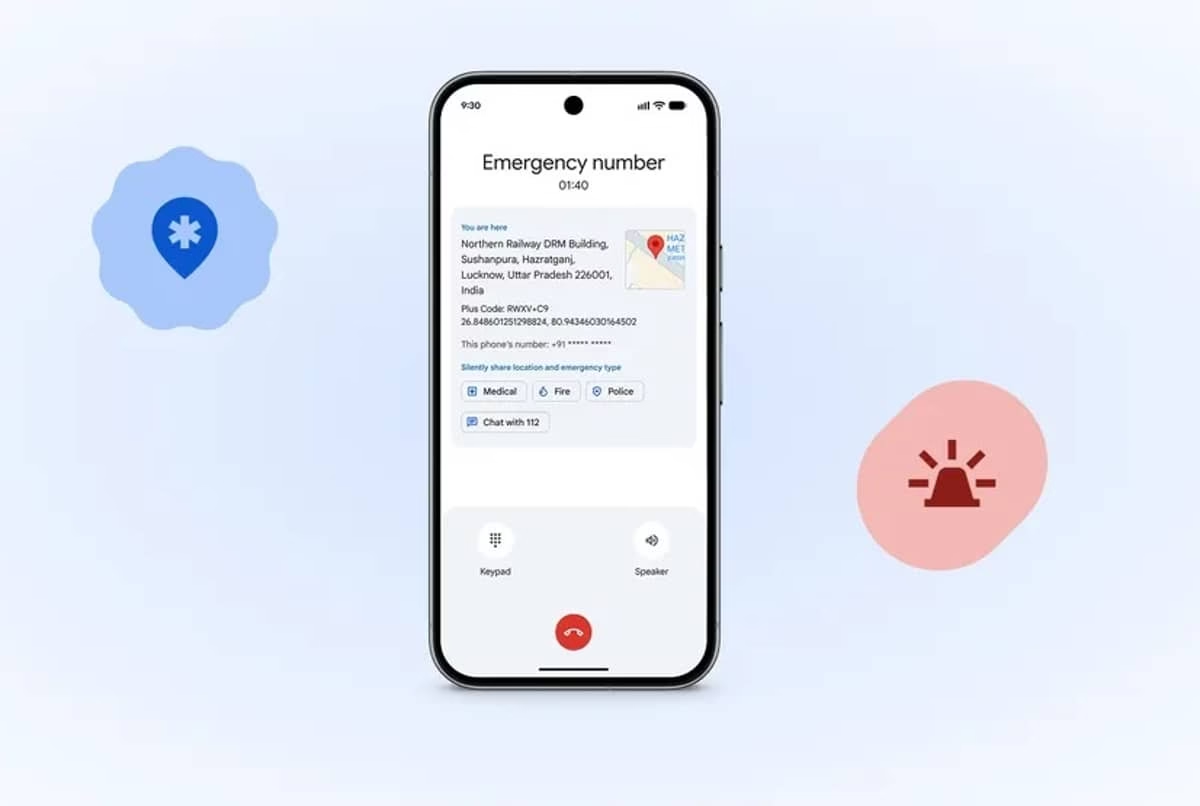
Google has started rolling out its Android Emergency Location Service (ELS) in India, a feature designed to help emergency services reach people faster by automatically sharing their exact location when they call for help. While the feature is now active on Android phones across the country, Uttar Pradesh is the first state to fully support it on the backend.
Why location accuracy matters in emergencies
During emergencies, responders often struggle to find callers quickly—especially in crowded cities or areas without clear addresses. Traditional mobile network tracking usually shows only a broad area, sometimes several kilometres wide, which can delay rescue efforts.
Google’s ELS solves this problem by using a mix of GPS, Wi-Fi, and mobile network data to pinpoint a caller’s location. According to Google, this can reduce the location accuracy to within about 50 metres. The location data is sent automatically as soon as an emergency call or message is made, even if the call disconnects shortly after.
Why Uttar Pradesh is the first state to get it
Having ELS on smartphones is only part of the solution. Emergency control rooms also need updated systems to receive and understand the location data sent by phones.
Uttar Pradesh has become the first Indian state to complete this setup. The state police, in partnership with Pert Telecom Solutions, have integrated ELS into the state’s central 112 emergency response system. In other states, the feature will stay inactive until their emergency services upgrade their infrastructure. The service works on most Android phones running Android 6.0 or newer.
Privacy remains a key focus
Google says user privacy has been kept at the centre of the system. Location data is sent directly from the phone to emergency services, without passing through Google’s servers. This means Google does not see, store, or use the location information.
The feature remains turned off during normal phone use and only activates when an emergency number is dialled.
Why this matters for India
ELS could be a major step forward for public safety in India, where addresses are often unclear and explaining a location during a crisis can be difficult. Automatic location sharing reduces pressure on callers and helps responders act faster.
Globally, Google says ELS has already supported over 20 million emergency cases. In India, the real impact will depend on how quickly other states follow Uttar Pradesh’s lead and upgrade their emergency response systems.
What to expect next
As ELS begins working in Uttar Pradesh, other state governments are expected to face growing pressure to modernise their emergency infrastructure. Until then, the feature will remain available on Android phones but usable only in regions where emergency services are technically ready to receive the data.