



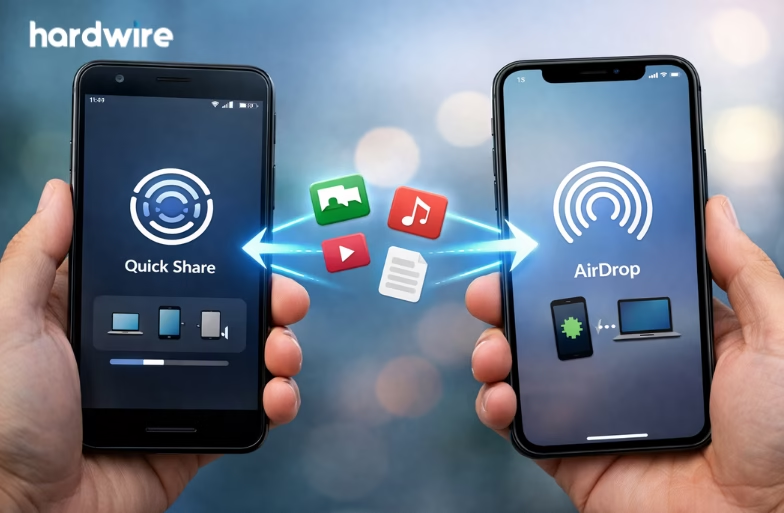
Google said it will soon bring what many Android users have long wanted: Apple’s native AirDrop-like file sharing to all Android phones. The company first made Android’s Quick Share work with AirDrop on its Pixel 10 models. Now it has confirmed that this cross-platform feature will reach a wider range of Android devices in 2026. The move aims to make sharing files between Android and iPhone much easier for users around the world.
What Is Android’s AirDrop-Style Sharing?
Google’s file-sharing tool for Android is called Quick Share. It lets users send photos, videos, documents and other files to nearby devices without cables. Quick Share has worked between Android phones and even Chromebooks for some time.
In late 2025, Google added support for Apple’s AirDrop protocol to Quick Share. This meant Pixel 10 phones could send files to iPhones, iPads and Mac computers as if they were just another AirDrop device. But that capability was limited to Pixel 10 models at first.
AirDrop is Apple’s way of sharing files wirelessly. It uses Bluetooth and Wi-Fi to find nearby devices and send content fast, without the internet. For years, it was a big advantage for Apple users because Android users had no direct equivalent that worked with iPhones.
Why Google Is Expanding AirDrop Support
During a press briefing in Taipei, Eric Kay, Google’s Vice President of Engineering for Android, confirmed the expansion plans. He said Google spent much of 2025 testing and proving the AirDrop-compatible Quick Share feature with iPhones, iPads and Macs. Now the company is ready to bring it to many more Android phones in 2026.
Moreover, the company is working with phone makers to roll out the Google Airdrop Feature across different brands. The company did not list specific models yet. But the announcement signals a broad push to break down barriers between Android and Apple devices. Users will no longer need third-party apps or workarounds like email or cloud uploads to send files between platforms. Quick Share with AirDrop support works directly between devices.
How The Google Airdrop Feature Works And What To Expect
Quick Share’s new cross-platform mode works much like AirDrop does on Apple devices. When two devices are close by, they can detect each other and offer to send or receive files directly. This happens over Wi-Fi and Bluetooth, without needing a mobile or Wi-Fi network connection.
The company said Quick Share with AirDrop works with strong protections and does not route data through servers. Files travel between devices directly and securely. For now, only a few Pixel models have the feature. But with the expansion, many more Android phones could soon share files with iPhones and Macs as easily as two iPhones share files with each other.
Benefits For Users
The key advantage of this update is simplicity. Users will be able to send content across platforms without apps like WhatsApp, email or cloud links. The experience will be fast and seamless, closer to what Apple users enjoy already.
For people with both Android and Apple devices or those who switch between them, this could save time. It also removes one big frustration for families, friends, and workers who often need to share files.
Limits And What Is Still Unclear
Google has not yet said exactly which Android devices will get the expanded AirDrop support first. It also did not give a firm date for the Google Airdrop Feature rollout beyond saying it will happen in 2026.
Older Android phones may get support later, and specific timing could vary by manufacturer and region. Users may need a software update to Quick Share or Android itself before the feature appears on their phones.
What This Means For Android And Apple Users
This development could help close a long-standing gap between Android and iOS. Apple’s AirDrop has been one of the most-used features among iPhone fans. Its absence on Android made cross-platform sharing awkward and slow.
With Quick Share gaining AirDrop compatibility, Android users will enjoy a more unified sharing experience. It also reduces one reason people might stay in the Apple ecosystem.
Apple’s response to this shift remains unknown. The company did not work with Google on making AirDrop accessible to Android. But if the feature works well and securely, it could prompt closer cooperation between the two tech giants.
Conclusion
Google’s confirmation that AirDrop-style sharing is coming to more Android phones is an important moment in mobile tech. It shows a move toward greater compatibility and convenience for users. While Android and iOS remain different ecosystems, tools like Quick Share with AirDrop support help bridge the divide. In the months ahead, Android users should watch for updates that bring this Google Airdrop Feature to their devices.
FAQs
1. Will the new AirDrop-style feature work between Android and Windows PCs?
Yes, Google already integrates Quick Share with Windows through a dedicated app. However, the AirDrop-compatible version currently focuses on Apple devices. Future updates may unify Android, Apple and Windows sharing for a truly cross-platform experience.
2. How is this update different from Nearby Share?
Quick Share is an improved version of Nearby Share. Google rebranded it to align with Samsung’s file-sharing system and added AirDrop compatibility. This merger simplifies the sharing experience and removes confusion between different Android brands.
3. Will Apple have to approve this AirDrop compatibility?
No, Apple’s direct approval isn’t required. Google engineered Quick Share to work with AirDrop’s discovery and communication protocols. However, Apple could make technical changes in future iOS updates that might affect how smoothly it works.
4. Can iPhone users also send files to Android phones using AirDrop?
Yes, but with a small limitation. iPhone users will need to set their AirDrop visibility to “Everyone for 10 Minutes” to detect nearby Android devices. Once connected, files can be exchanged normally in both directions.