







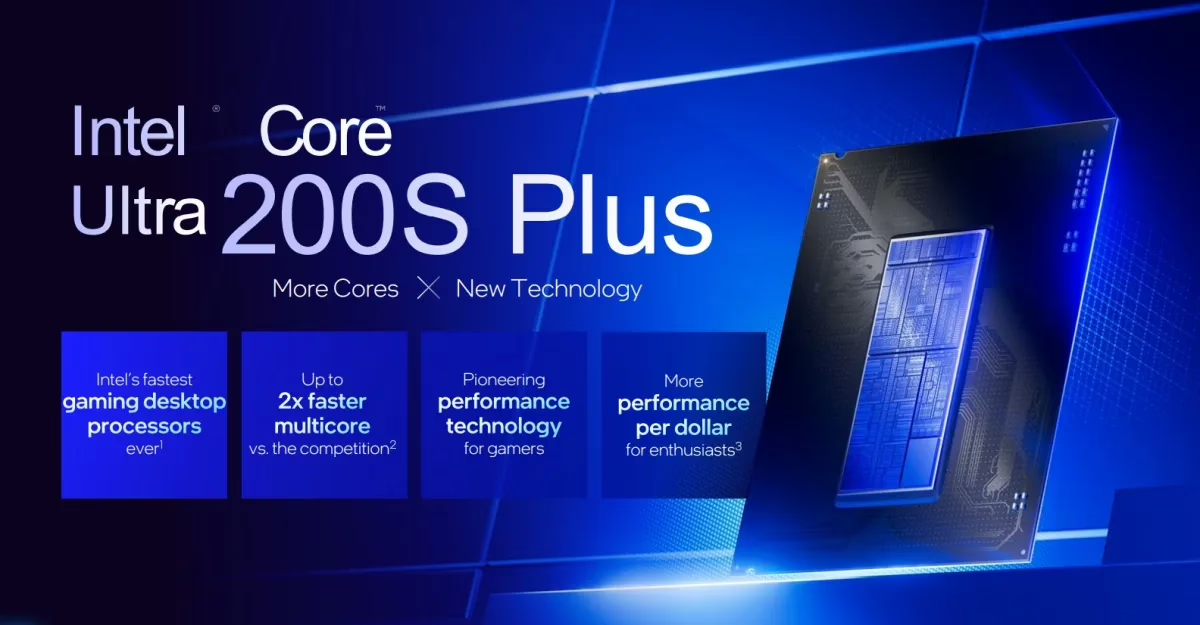
I’ve been watching the desktop processor wars closely this year, and Intel just pulled off a major surprise that’s going to make budget-conscious gamers very happy. While everyone was waiting for the next big flagship, Intel quietly dropped the Core Ultra 200S Plus series. This isn’t just a minor refresh; it’s a mid-cycle “supercharge” that targets the heart of the market with two new chips: the Core Ultra 5 250K Plus and the Core Ultra 7 270K Plus.
What caught my eye immediately isn’t just the spec bump, but the price-to-performance ratio Intel is aiming for. Starting at just $199, Intel is clearly looking to reclaim its throne from AMD in the mid-range segment. If you’ve been waiting to build a new rig or upgrade your aging setup, you should definitely check this out when they hit shelves on March 26.
Performance & Benchmarks: Crushing the Competition
I noticed something almost hard to believe in Intel’s internal testing. They are claiming that these “Plus” variants are absolutely obliterating AMD’s 9000-series in multi-threaded tasks. The Core Ultra 7 270K Plus, with its 24 cores and 24 threads, reportedly scored nearly double the points of the AMD 9700X in Cinebench. This matters because if you’re a creator who spends time editing 4K video or 3D rendering in Blender, these chips could literally cut your waiting time in half compared to the current competition.
-
Core Ultra 5 250K Plus: 18 Cores, 5.3GHz peak clock, and an 18-thread setup.
-
Core Ultra 7 270K Plus: 24 Cores, 5.5GHz peak clock, and 24 threads.
-
Gaming Gains: Expect a 13% to 15% jump in titles like Assassin’s Creed Shadows or Star Wars Outlaws compared to the non-Plus versions.
Design & Compatibility: Built for the Future
This series isn’t just about raw speed; it’s about modernizing the entire platform. Intel has boosted the Device-to-Device (D2D) frequency by 900MHz, which effectively speeds up how different parts of the chip talk to each other. This might sound technical, but in the real world, it means a snappier Windows 11 experience and fewer “hiccups” during heavy multitasking.
It’s also great to see that these chips are fully ready for the latest hardware. They are designed to sit perfectly in motherboards like the Asus ROG Maximus Z890 Hero and have the headroom to handle even the monster Nvidia GeForce RTX 5090. It’s a clear signal that Intel wants these to be the foundation for 2026’s most powerful enthusiast builds.
This launch feels like Intel is finally playing offense again in the sub-$300 market. I’ll be keeping a close eye on independent reviews to see if these massive benchmark leads hold up in real-world gaming—let’s see how this performs in real-world use.


