





According to reports shared by Gadgets 360, Apple has decided to scale back its plans for an AI-powered health coach. The project, known inside Apple as “Project Mulberry,” was expected to offer personalised fitness and wellness advice. This move comes as the company reshapes its health and artificial intelligence plans for 2026. The decision was reportedly made after internal leadership changes and a shift in focus towards other AI-based products and services. Check the full story.
What was Apple’s AI health coach project?
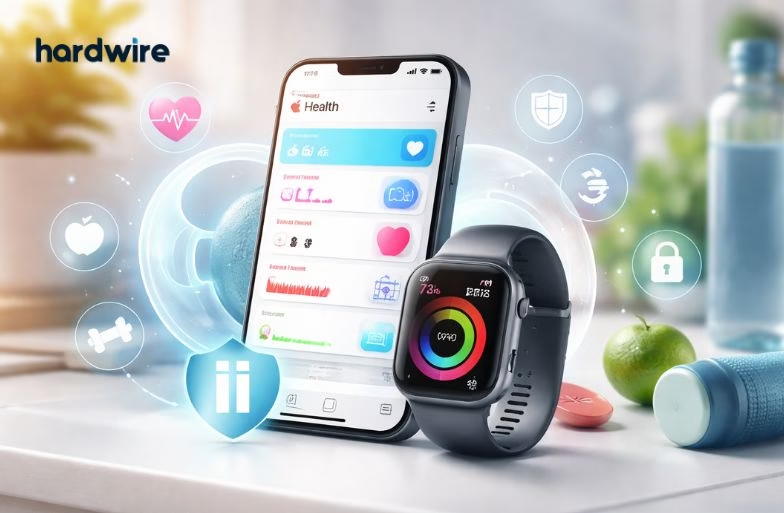
Project Mulberry was meant to be one of Apple’s most advanced health initiatives. The idea was to use artificial intelligence to act as a personal health assistant. It would analyse data from Apple Watch, iPhone, and the Health app to provide tailored tips on exercise, sleep, nutrition, and stress management.
The project was developed by a small team of health and AI experts within Apple. It aimed to give users regular wellness recommendations based on daily habits and lifestyle patterns. For instance, the coach could suggest better sleep schedules or short breaks during long work hours.
Why Apple is scaling back its AI health plans
Apple’s decision to scale down Project Mulberry is linked to several internal and market factors.
First, there have been leadership changes within Apple’s health and services teams. This led the company to review how it wants to use artificial intelligence in the health sector.
Second, Apple is known for its strong focus on privacy and data security. Launching an AI coach that handles sensitive health data would require strict safety measures.
Third, the global AI race has grown competitive. Companies such as Oura, Whoop, and even OpenAI are exploring health-focused AI tools. Apple may have decided to refine its plans before bringing such a service to the public.
Moreover, Apple CEO Tim Cook recently confirmed that the company is investing heavily in artificial intelligence. He said that users can expect “new AI-based products and services” later in 2026. The company is also expected to reveal an improved version of Siri powered by on-device intelligence. This could make voice interactions faster, more private, and more context-aware.
The shift from big projects to smaller, practical AI features
Apple now wants to release AI in smaller steps rather than large projects. This new strategy means users might see gradual improvements in daily apps instead of one big launch. Take the following as an example:
- The Health app may soon offer smarter summaries and reminders.
- Fitness+ could get AI-driven personal routines.
- iCloud might use machine learning to help organise photos or notes more efficiently.
By taking this modular approach, Apple can add AI benefits while keeping the experience private and reliable, something its users value highly.
Competition in the AI health space
While Apple rethinks its strategy, rivals continue to expand in the AI health sector.
- Oura offers smart rings that track heart rate, sleep quality, and activity, using AI to provide personalised insights.
- Whoop and Fitbit are also working on predictive health coaching.
- OpenAI recently teased “ChatGPT Health,” a project designed to answer health-related queries and suggest routines.
These companies are experimenting quickly, but Apple’s slower and steadier approach may help it deliver more trustworthy tools in the long run.
Industry Experts’ take
Tech analysts see this as a smart pause, not a failure. Apple’s strength lies in refining ideas until they are fully ready for the market. Scaling back now allows the company to test its AI systems thoroughly before wider use.
Experts also believe in Apple’s ecosystem. This includes the Watch, iPhone, iPad, and Health app. Once its AI features are ready, they could integrate smoothly across all devices.
What can Apple users expect next?
Even though Project Mulberry is on hold, Apple users can expect new AI features soon. Reports hint that iOS 20 and watchOS 12 will include health improvements powered by machine learning. Some of the expected are:
- AI-generated summaries of health trends in the Health app.
- A smarter Siri that offers context-based health advice.
- Enhanced data syncing between Apple Watch and iPhone for better fitness tracking.
Additionally, Apple may also introduce tools that use AI to detect emotional health or monitor stress through breathing and heart rate patterns.
Conclusion
Apple’s move shows that building a reliable AI health coach is more complex than many assume. The project combined medical science, machine learning, and strict privacy standards.
By stepping back now, Apple is likely preparing for a more stable and trustworthy launch later. When the company finally introduces a health-focused AI tool, it may be safer, more accurate, and more transparent than current alternatives. Share your views in the comments!