


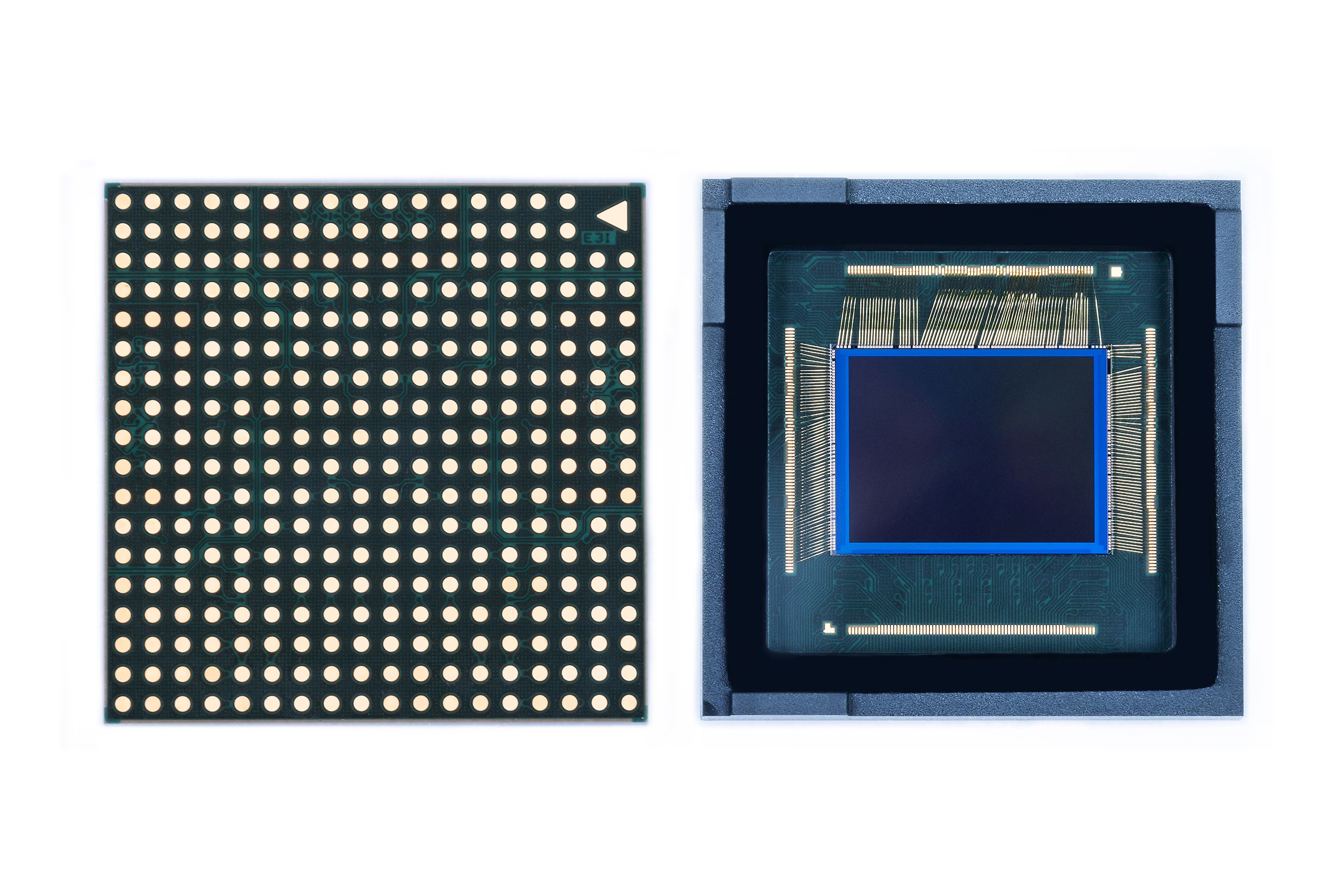
Samsung is reportedly working on a brand new image sensor for its upcoming Galaxy flagship phones. Early industry reports suggest that the company wants to solve one of the biggest challenges in smartphone photography: capturing fast-moving subjects clearly without distortion. The goal is to get the speed and accuracy of a global shutter, even though the hardware will still be based on a rolling shutter system.
How Samsung Plans to Improve Motion Capture
Global shutter cameras capture all pixels at the same time, which makes them great for shooting fast-moving scenes. But they usually need larger pixels, which reduces overall resolution. Rolling shutter cameras scan the image line by line, which keeps resolution high but can cause bending or warping when shooting motion.
According to South Korea’s Sisa Journal, Samsung’s new sensor aims to get the best of both worlds. It will use a redesigned pixel structure along with an “optical flow” algorithm that can correct motion distortion in real time. A Samsung official quoted in the report said this approach can deliver global shutter-like performance even with very small pixels.
Key Tech Details
The upcoming sensor will reportedly use a 1.5-micrometre pixel pitch and a 12-megapixel lens setup. Samsung is also said to be improving efficiency by placing the Analogue-to-Digital Converter directly inside each pixel instead of using a separate chip for data conversion.
Even though each pixel remains 1.5 micrometres, Samsung is using a 2×2 pixel bundling technique. This allows the four pixels to work together like a larger 3-micrometre pixel, helping capture more light and improving image quality.
When Will Samsung Reveal It
Samsung has already submitted a research paper on this new sensor to the International Solid-State Circuits Conference. More details are expected to be officially shared at the event, which will take place from February 15 to 19, 2026.
The new sensor could mark a major advancement in smartphone camera technology, especially for users who want clearer action shots without losing resolution.
