






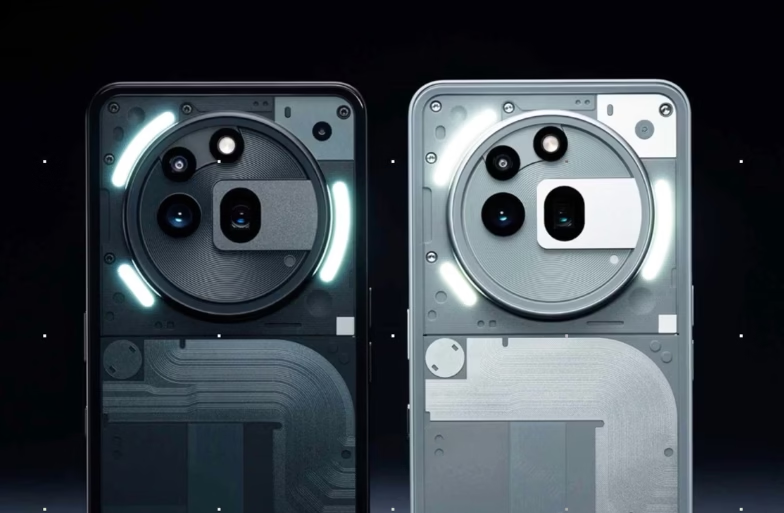
The Nothing Phone 4a Pro is generating buzz ahead of its expected March 2026 launch. Certification listings and leaks reveal details on battery, durability and performance. The upcoming model follows its predecessor, Nothing Phone 3a, which set a strong benchmark in the mid-range segment with its clean Nothing OS experience, premium design and capable cameras. With the 4a Pro, Nothing appears to be refining that formula as this time, it is focusing more on faster performance, a more robust build and improved battery efficiency. Fans are keeping a close watch as early information shapes expectations for the next big mid-range offering from Nothing. Read on to get more details on the expected specs and pricing.
Nothing Phone 4a Pricing and Availability
The Nothing Phone 4a Pro is rumoured to cost around $540 (approximately Rs 49,000) for the 12GB + 256GB variant. This places it in the upper mid-range segment. The standard Nothing Phone 4a is expected to debut alongside the Pro variant. It will likely have lower specifications and a slightly more affordable price point. This would also give consumers multiple options.
Moreover, Industry watchers believe the launch may coincide globally in March 2026 similar to the pattern of previous Nothing releases.
Specs and Performance (Expected)
Certification listings and leaks suggest the Phone 4a Pro will feature a 5,080mAh battery with 50W wired fast charging. The battery could retain 80 % capacity after roughly 1,400 charge cycles. Durability is also enhanced with an IP65 dust and water resistance rating. Repairability scores remain moderate.
Talking about the performance of the new Nothing Phone 4a , various leaks point to a Snapdragon 7s Gen 4 chipset, up to 12GB RAM and 256GB storage. The Pro may also support eSIM and is expected to come in pink, blue, black and white.
While Nothing has not confirmed these specs, social media chatter shows excitement for improved battery and durability.
Design and Everyday Use
Users can likely expect a lightweight frame, comfortable handling and a user-friendly interface. The modest improvements in durability, battery and performance aim to make it a reliable daily driver for mid-range smartphone buyers.
Conclusion
With the March 2026 launch approaching, the device looks set to offer practical improvements while keeping the core design and performance consistent. Consumers can expect a dependable mid-range smartphone with a few noteworthy refinements that make it more durable and long-lasting.