


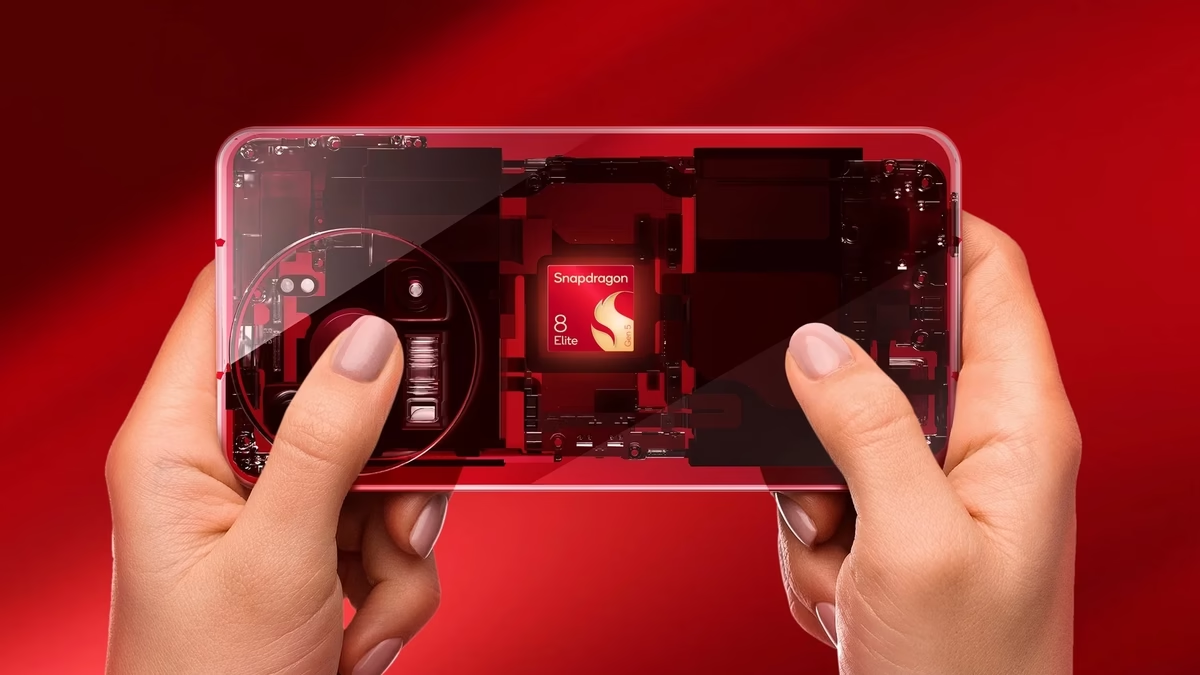
Qualcomm has effectively quashed rumors of a complete Exynos takeover for Samsung’s upcoming flagship lineup. In a double-sided strategic win, the US chipmaker confirmed it will power the vast majority of Galaxy S26 devices while simultaneously negotiating to move its manufacturing to Samsung’s foundry business.
Snapdragon remains the primary engine
Despite persistent reports that Samsung Mobile intended to switch heavily to its in-house Exynos 2600 silicon for the Galaxy S26 series, Qualcomm CEO Cristiano Amon clarified the reality during CES 2026. Amon stated that Qualcomm expects to maintain a 75 percent share of the application processor market for Galaxy devices.
This confirms that while the “dual-chip” strategy is returning—where different regions get different processors—the split will heavily favor Snapdragon. Markets like the US, China, and Japan are expected to receive the Snapdragon variant, leaving the Exynos model primarily for Europe and Korea. This mirrors the arrangement seen in earlier generations, walking back the exclusive Snapdragon arrangement found in the Galaxy S25 era.
A manufacturing pivot to 2nm
The deeper industry shift lies in who builds these chips. For years, Qualcomm relied on TSMC’s manufacturing lines to produce its top-tier silicon. However, new reports indicate Qualcomm is finalizing a deal to manufacture the “Snapdragon 8 Elite Gen 5” using Samsung Foundry’s cutting-edge 2nm process.
According to Korean media outlets, the design phase for the 2nm chip is complete, and the companies are currently exchanging wafers for performance tuning. This suggests commercialization is imminent. If finalized, Samsung is expected to dedicate roughly 10 percent of its Hwaseong facility’s capacity to Qualcomm orders, potentially generating significant revenue for its semiconductor division.
Market Impact & Context
This development represents a critical lifeline for Samsung Foundry. The division has struggled to compete with TSMC’s yield rates and thermal efficiency in recent years. Winning a flagship order from Qualcomm validates Samsung’s 2nm technology and proves it can once again handle high-performance, high-volume manufacturing.
For consumers, the 75 percent split reassures power users who historically favor Snapdragon chips for their superior thermal management and battery efficiency compared to Exynos counterparts. It signals that while Samsung Mobile wants independence, it is not yet ready to fully bet its flagship reputation on its own silicon.
What comes next
The Galaxy S26 series is widely expected to debut at an Unpacked event in San Francisco on February 25, 2026. Performance benchmarks comparing the Samsung-manufactured Snapdragon chips against the Exynos variants will likely surface shortly after launch.
