


Artificial intelligence has become an important aspect of how people search for health information online. Following this demand, OpenAI has introduced ChatGPT Health. It is a new dedicated health feature within ChatGPT that allows users to securely connect their medical records and wellness apps. With the help of the app, people can better understand their health data and manage their wellness. Read the article below for more details on this.
What Is ChatGPT Health And How It Works
ChatGPT Health is a new space under the application, which is designed for health-related conversations. It is separate from regular chats and has encryption to protect sensitive information. Users can connect medical records and wellness apps like Apple Health, Function and MyFitnessPal so ChatGPT can give more personalised and relevant responses.
The feature was built with guidance from hundreds of physicians across many countries. It helps with everyday health questions. These include explaining lab results, suggesting what questions to ask a doctor, tracking diet and exercise patterns etc.
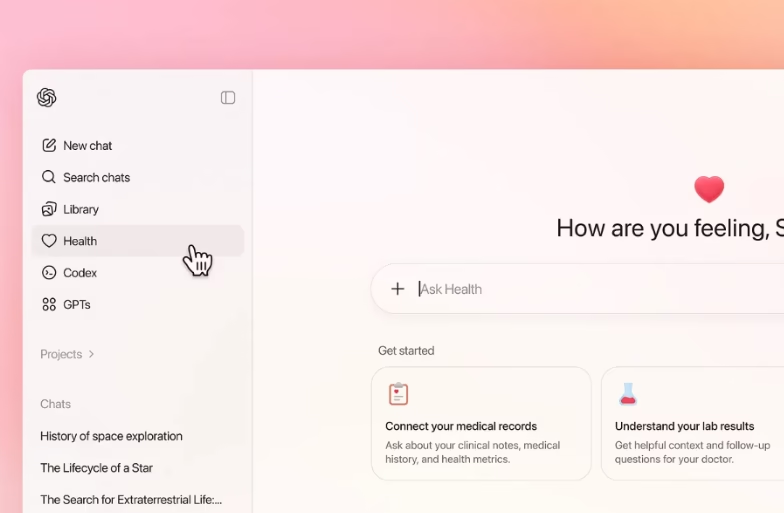
ChatGPT Health is careful to say it does not diagnose or treat conditions. It is a supportive tool to help people better understand their own health information. It should not replace clinicians.
Benefits And Use Cases Of ChatGPT Health
The new health feature aims to make health information easier to understand and use. Some of it benefits are as follows:
- Explains Medical Results
- Preparation For Doctor Visits
- Connects App And Device Data
- Helps Track Trends Over Time
Privacy and Safety Measures
OpenAI has added extra privacy protections for ChatGPT Health. In this, all health conversations, connected apps and medical files are kept in a separate space from other chats. Additionally, Users can view or delete their health memory at any time.
Moreover, access is initially being given to a small group of users on ChatGPT Free, Go, Plus and Pro plans outside of Europe, the UK and Switzerland.
With ChatGPT Health, OpenAI has taken a major step toward offering users a secure way to connect their health data with AI tools. It complements medical professionals rather than replacing.
