


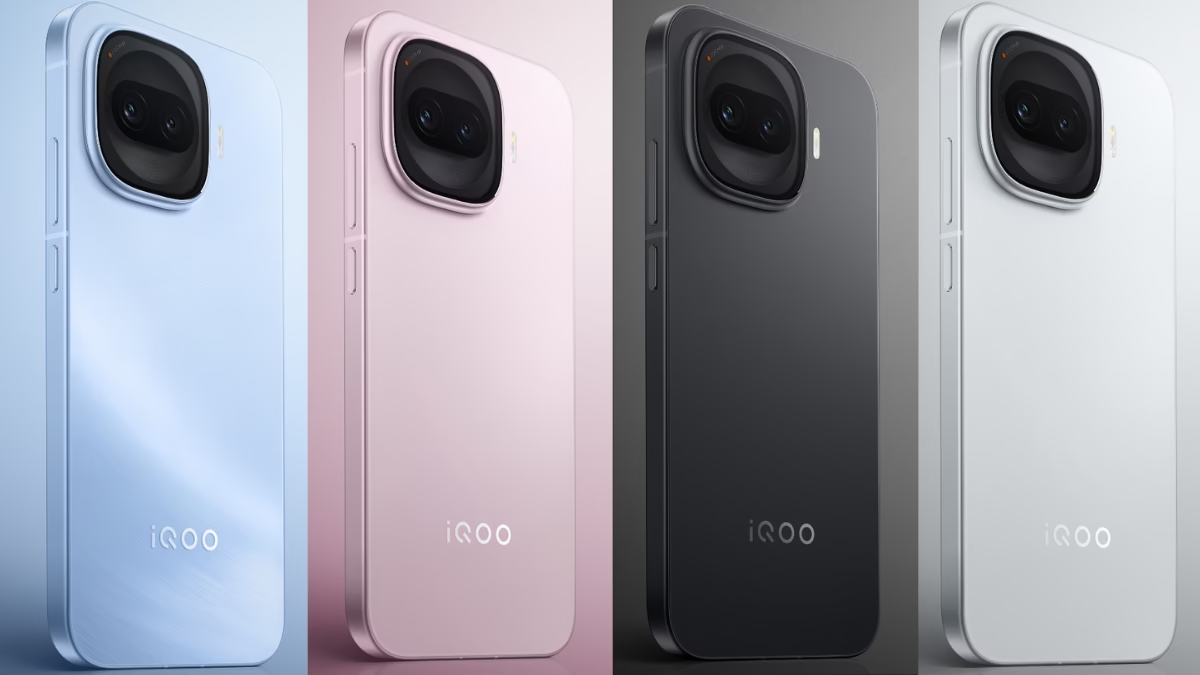
iQOO has officially set the date for its next big release. The performance-focused iQOO Z11 Turbo will launch in China on January 15, bringing top-tier specs to the mid-range market. The company also confirmed the phone will pair Qualcomm’s newest processor with one of the largest batteries seen in this segment.
Speed and gaming upgrades
The Z11 Turbo will run on the Snapdragon 8 Gen 5, a chip typically reserved for much more expensive flagship phones. To boost gaming further, iQOO is adding its own Q2 e-sports chip. This extra processor handles graphics tasks to keep frame rates smooth during long play sessions without overheating the phone.
Users can expect serious power here, with memory options reportedly going up to 16GB of RAM and 1TB of storage.
Big power in a thin design
Perhaps the most surprising spec is the battery. The phone packs a massive 7,600mAh cell, yet the chassis is only 7.9mm thick. This is unusually slim for a battery this large, suggesting iQOO is using newer, denser battery tech.
When you do run low on power, 100W fast charging is included. The phone also supports a direct-power mode that bypasses the battery while gaming to reduce heat.
Screen and camera details
The front of the device features a 6.59-inch 1.5K display. The build quality looks solid as well, featuring a metal frame and glass back with high-grade water and dust resistance (IP68 and IP69).
For photos, the main camera uses a sharp 200-megapixel sensor. It is joined by a modest 8-megapixel ultra-wide lens and a 32-megapixel selfie camera.
Market Impact & Context
This phone is aggressively targeting the “flagship killer” space. By offering the latest Snapdragon chip and a 7,600mAh battery for an estimated price of roughly CNY 2,500 (approx. Rs. 32,000), iQOO is putting immense pressure on rivals like Redmi and Realme. It proves that high performance and long battery life don’t necessarily require a bulky, expensive device.
What happens next
Pre-orders are already open in China with four color choices: Blue, Pink, Black, and White. While the January 15 event is for the domestic market, a global launch usually follows a few months later.
