


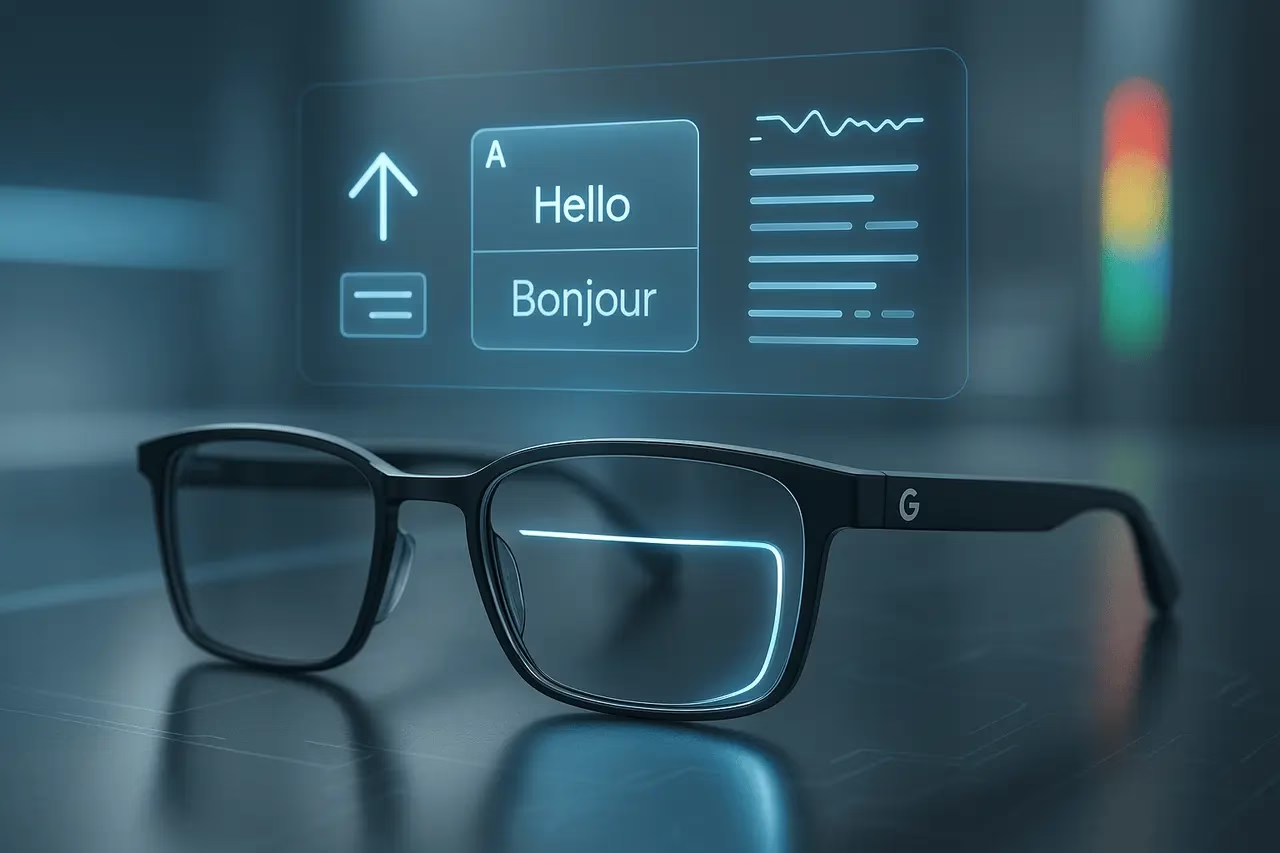
Google is getting ready to introduce a new lineup of AI-powered smart glasses in 2026. The company shared the update at an event earlier this week, marking its biggest push yet into consumer hardware driven by artificial intelligence. The move comes at a time when the smart glasses market is gaining momentum, with Meta currently leading the category.
Partnership-Based Development
Unlike Google’s Pixel products, which are built in-house, these smart glasses will be created through partnerships. Google is teaming up with brands like Samsung, Gentle Monster, and Warby Parker to build the first generation of its wearable devices. This strategy is similar to what Samsung and Google used for the Galaxy XR headset, leaning on outside hardware expertise rather than relying solely on internal development.
Audio-Only Model
The first version will be a lightweight pair of glasses without a screen. It will include speakers, microphones, and cameras. Much like Meta’s basic Ray-Ban AI glasses, this model will let users ask questions and receive instant answers from Google’s Gemini AI assistant through audio.
Display-Enabled Model
A more advanced version is also in the works. This model will include a heads-up display capable of showing visual information such as maps, navigation prompts, and real-time translations. Google says the first display-equipped glasses are expected to arrive next year.
Growing Competition
Smart glasses have recently seen a rise in popularity thanks to Meta’s Ray-Ban lineup, built with EssilorLuxottica. Since launching the second generation in October 2023, Meta has sold over 2 million units. Sales tripled in Q2 2025 and helped the company achieve 22 percent year-over-year revenue growth. Meta also expanded its offerings with a display-equipped model priced at 799 dollars.
Even with growing interest, smart glasses still make up a relatively small market compared to major revenue drivers like Apple’s iPhone. Still, many industry experts believe that stylish, lightweight smart glasses could eventually replace smartphones as the main way people interact with digital information.
Apple has not entered this category yet, but reports say the company may release its own screen-free smart glasses in 2026 or 2027.
