


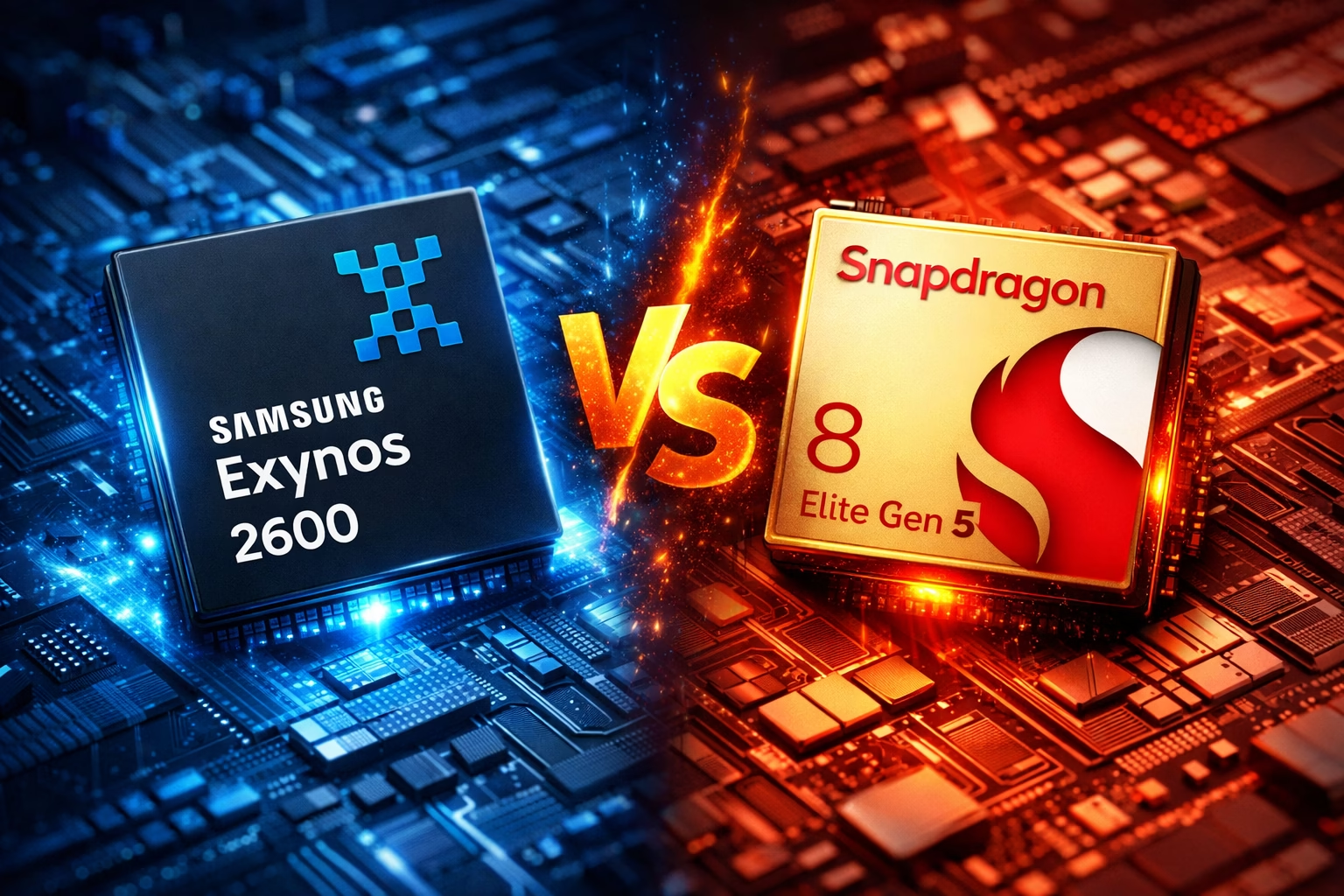
The newly unveiled Exynos 2600 and the Snapdragon 8 Elite Gen 5 are considered two of the most advanced mobile chipsets to date. The latest developments have once again brought Samsung and Qualcomm face-to-face with their next flagship processors. Both chips sit at the top of their respective lineups and feature cutting-edge technology.
Qualcomm continues to focus on raw performance and long-term stability, while Samsung is placing strong emphasis on newer manufacturing technology and improved efficiency. Scroll down for a quick comparison between Exynos 2600 and the Snapdragon 8 Elite Gen 5.

| Exynos 2600 and the Snapdragon 8 Elite Gen 5 | ||
| Features | Exynos 2600 | Snapdragon 8 Elite Gen 5 |
| Manufacturing | 2nm process | 3nm process |
| CPU | 10-core setup | 8-core setup |
| GPU | Xclipse 960 (AMD-based) | Adreno 840 |
| AI Engine | Advanced dual-core NPU | Hexagon AI engine |
| Focus Areas | Efficiency + AI | Raw performance |
CPU Performance
Starting with the Snapdragon 8 Elite Gen 5, the chipset delivers faster and more stable CPU performance. It is well-suited for demanding tasks such as gaming and running heavy applications, and it is designed to maintain consistent performance over extended periods.
The Exynos 2600, on the other hand, focuses on smooth multitasking and everyday usage. Early benchmark data suggests that Samsung has managed to slightly reduce the performance gap compared to its previous-generation Exynos chipsets.
GPU & Gaming
Qualcomm’s Adreno GPU is widely known for its reliability in gaming, offering better optimisation and stable frame rates. This makes it a strong choice for users who prioritise mobile gaming.
The Exynos 2600 features an AMD-based Xclipse GPU, which aims to deliver improved graphics performance along with richer visual effects. While it shows promise, real-world gaming results will be clearer once devices hit the market.
AI Capabilities
Both chipsets place a strong emphasis on AI. The Snapdragon 8 Elite Gen 5 comes with a mature AI engine that efficiently handles voice recognition, photography, and various on-device AI tasks.
Meanwhile, the Exynos 2600 highlights AI-driven features such as low-light photography, image enhancement, and power optimisation, largely supported by its upgraded NPU.
Display Performance
Both processors support high-resolution displays with fast refresh rates. In everyday use, most users are unlikely to notice a significant difference. Each chipset is capable of delivering smooth scrolling, vibrant colours, and reliable performance on AMOLED displays.
Battery Efficiency
Thanks to its advanced 2nm manufacturing process, the Exynos 2600 is expected to offer improved power efficiency. Snapdragon chipsets, however, are generally known for more consistent performance during long usage scenarios such as extended gaming sessions and video streaming.
Conclusion
The Snapdragon 8 Elite Gen 5 remains the safer option for users who prioritise top-tier performance and gaming stability. The Exynos 2600, however, shows noticeable improvements and is expected to deliver better battery efficiency along with enhanced AI features. Ultimately, the final decision will depend on real-world performance, device optimisation, and pricing.
