




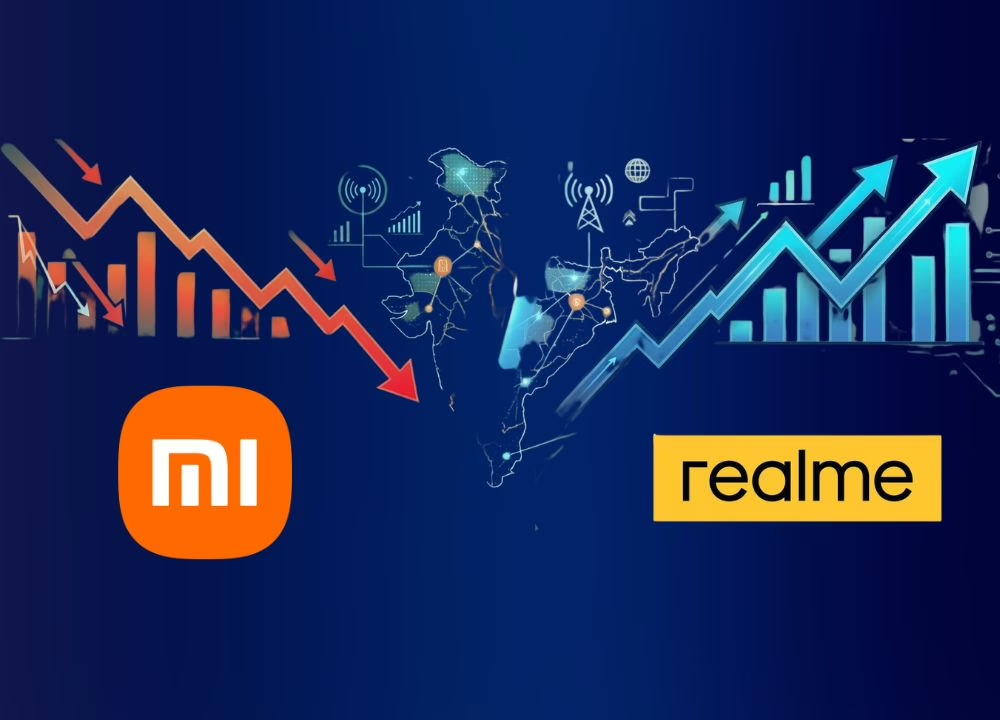
Xiaomi’s India smartphone business has slumped over the past two years even as Realme has held its ground or gained share. In 2025 Xiaomi’s India smartphone volume share fell from about 12% in 2024 to ~8%, dropping it out of the top‐five brands. In contrast, Realme overtook Xiaomi by mid-2025, reaching roughly 10% share in Q1–Q3 2025 (versus ~8–9% for Xiaomi).
This translates into Xiaomi’s shipments plunging (e.g. –42% YoY in Q1 2025) while Realme managed modest growth early on. Market trackers (IDC/Canalys/Counterpoint) show Xiaomi’s volumes trending down as Realme’s decline has been much more modest. Key drivers include Xiaomi’s over-reliance on fading low-end models, inferior product/mix timing, and channel/inventory issues, whereas Realme has benefited from new launches, diversified portfolio (C-series, Narzo, GT series), and aggressive offline promotions.
Both brands face a premiumization trend: average smartphone ASPs in India jumped from ~$259 in late 2024 to ~$294 by Q3 2025. Xiaomi is now pivoting toward premium devices and ecosystem products (TVs, IoT) to offset slowing entry-level demand. Short-term outlook is challenging: IDC and others forecast flat or declining volumes in 2026 amid memory-chip shortages and price pressures. Strategic recommendations for Xiaomi include pruning SKUs (avoid dependence on few “hero” models), strengthening offline channels (as Realme has done), and boosting high-end branding. Risks include component shortages, currency inflation, and intensifying competition from Vivo/Oppo/Samsung and even Apple.
Background: Xiaomi and Realme in India
Xiaomi: A Beijing-based firm founded in 2010, Xiaomi was an early entrant in India (launching in 2014) and quickly grew via online flash-sales and “Mi” stores. By Q3 2017 it had overtaken Samsung to become the largest smartphone brand in India. Xiaomi’s strategy has been aggressive pricing (“keeping prices close to costs” via long product cycles and flash sales) and rapidly expanding its Redmi (budget) and Mi series.
It also introduced sub-brands (Poco globally, Redmi India) and has local manufacturing in India to offset tariffs. Xiaomi remained a market leader for years and as recently as 2022 led Q1 India sales (Canalys). Its brand is associated with value (e.g. “flagship killer” Poco models) and a broad IoT product ecosystem.
Realme: Founded in May 2018 by ex-Oppo executives, Realme is a smartphone and tech brand spun off from Oppo. It launched its first India phone in mid-2018 and swiftly climbed to become India’s fourth-largest smartphone maker by 2019, behind Xiaomi, Samsung and Vivo. Realme targets young/upgrading consumers with a “Dare to Leap” philosophy and a segmented portfolio: the Number series (midrange, offline volume drivers), C-series/Narzo (value models), P-series (online-focused), and GT-series (flagship with AI/camera focus).
Its marketing has emphasized camera, performance and collaborations (e.g. GT models co-branded with Aston Martin). Realme has leveraged aggressive online marketing and a community (“squad leader”) strategy. Initially known for extremely competitive pricing in the ₹10k–20k segment, Realme has in 2024–25 been pushing into higher ASP models (e.g. 14 Pro at ~$400) while pruning low-end SKUs.
Market Trends (2024–2025)
Figure: IDC data show brand share trends (Q3 2023–Q4 2024) in India’s smartphone market. Xiaomi (purple) held ~12% share at end-2024, above Realme (yellow) at ~8%. (Vivo and Samsung led.)
India’s smartphone market has been essentially flat to mildly growing in the last two years. Total annual shipments were ~151M units in 2024 (up 4% YoY), and roughly 152M in 2025. By quarter, there were 36M units in Q4’24, 32M in Q1’25, 39M in Q2’25, and 48M in Q3’25. Average selling prices climbed sharply – from about US$259 in 2024 to an all-time $294 in Q3 2025 – as the market shifted to 5G and higher-end devices.
The table below summarizes Xiaomi vs Realme shipments and market share over recent quarters (sources: IDC, Canalys, Counterpoint).
| Quarter | Total Shipments (mn) | Xiaomi Share (%) | Realme Share (%) | Average ASP (USD) |
|---|---|---|---|---|
| Q4 2024 | 36 | ~12 (est.) | ~8 (est.) | 259 |
| Q1 2025 | 32 | 7.8 | 10.6 | (highest-ever Q1) |
| Q2 2025 | 39 | ~12.8 (5M of 39M) | ~9–10 (3.6M of 39M) | – |
| Q3 2025 | 48 | 9.2 | 9.8 | 294 |
Top models: Industry reports highlight different flagships driving each brand. In Q1 2025, Realme’s growth was “fueled by its affordable products – the Realme 14 series, Narzo 80 series and P3 series” which appealed to budget and midrange buyers. Xiaomi’s recent flagships (e.g. early Redmi Note 14 series) underperformed expectations. In Q3 2025 the iPhone 16 was India’s single top-selling model (~5% of market), while among Androids key sellers included Samsung’s A56/S24 lines, Oppo’s Reno 13 Pro, and Motorola’s Edge 60 Fusion. Xiaomi and Realme have not reported a dominant chart-topper – their models are spread across the value and mid tiers.
Causes of Xiaomi’s Decline (vs. Realme’s Strength)
-
Portfolio and segment mix: Analysts note that Xiaomi has been “relying on hero models” in the entry/mid segments, leaving it exposed when those models fade. In contrast, Realme has streamlined its lineup into clear series (GT, Number, P, C/Narzo) and refreshed them quarterly. For example, Realme removed confusing “Plus” variants and is powering “Pro” models with top specs, while pushing its offline-driven Number series for volume. This leaner, purpose-driven portfolio helped Realme maintain momentum. Xiaomi’s portfolio, by contrast, remained bloated with many budget models even as the sub-₹10k segment shrank (from ~70% of buyers five years ago to ~35% now). Xiaomi’s midrange (Redmi Note) refreshes were often mistimed (e.g. a very early Note 14 launch in Q1 2025 that failed to generate demand).
-
Pricing and positioning: Realme has typically been priced slightly below Xiaomi for similar specs, giving it a “value-plus” image. In 2025 Realme even started adding premium models (e.g. GT 7 Dream Edition at ₹49,999) to raise its ASP. Xiaomi, meanwhile, largely avoided deep discounts last year to protect margins. It ran inventory-clearing promotions on older Redmi models, but did not aggressively cut prices across its newer portfolio. By Q3 2025, industry data show Android ASPs surging due to premium demand – a shift that played to Realme’s advantage (as it gradually moved upscale) but penalized Xiaomi’s low-end base.
-
Product launches: Realme has maintained a steady cadence of launches across segments (e.g. new C-series and Number-series devices every quarter), which staved off inventory overhang. In contrast, Xiaomi’s launch schedule saw gaps or misfires. For instance, industry commentary noted “muted demand for Xiaomi’s affordable portfolios” and that an early Redmi Note 14 series launch “failed to enthuse buyers”. In Q2 2025, Xiaomi did refresh its budget models (Redmi 14C, A5) to spark sales, but overall it was playing catch-up. Meanwhile, Realme’s mid-2025 reboot (Realme 15 series and upcoming GT 8 Pro) showed a focused portfolio strategy.
-
Channel strategy & incentives: Realme has doubled down on offline retail, enticing dealers with attractive margins on its C-series and 14-series models. Canalys/IDC note that in Q2 2025, Realme’s offline hits (C73, C75, 14X) generated ~35% of its shipments. Xiaomi traditionally led online, but it has recently reorganized to strengthen both channels. In late 2025 Xiaomi split India into new sales zones and refocused leadership on e-commerce, signaling prior “hiccups in channel play”. Supply-chain analysts report that brands like Vivo and Oppo offered extra dealer margins in H2 2025, whereas Xiaomi was more conservative. Inventory levels were also a factor: Xiaomi entered 2025 with elevated channel inventory, so it was cautious in Q1 and only reloaded stock modestly. Realme, by contrast, pushed inventory into wholesale channels in Q2 ahead of the festive season, gaining share.
-
Competition and market trends: The overall Indian market has shifted toward premium models. Entry-level segments (<₹10k) are eroding under rising costs, which hurts Xiaomi more (it had been strongest in sub-₹15k). Vivo, Oppo and Motorola targeted Xiaomi’s customers: IDC notes they “capitalised” on Xiaomi’s slide. Apple’s record iPhone 16 sales (5M units Q3’25) have also grabbed discretionary spend. Meanwhile, Realme and iQOO have seized share in higher midrange. In essence, Xiaomi faces tougher competition not only from Realme but from Chinese rivals (Vivo/Oppo) that have broader range and from global brands exploiting the premium upswing.
-
Supply-chain and costs: Rising component prices (notably memory and chips for AI-capable phones) have forced all makers to raise prices. Xiaomi cited higher costs and “booming” AI-driven demand in data centers as reasons its ASP had to creep up in 2025. Global forecasts warn of a chip and memory shortage in 2026, likely leading to volume declines. Xiaomi’s profit margins are pressured by such cost inflation. Both Xiaomi and Realme have faced parts shortages (e.g. camera sensors). However, Xiaomi’s larger scale means it may secure supplies more easily, but also accumulate unsold inventory if demand lags.
-
Brand perception and software: Xiaomi’s brand in India is strongly associated with “value” and MIUI software, but recent consumer feedback indicates fatigue – complaints about ads/bloatware in MIUI, and slow OS updates are common (anecdotal). Realme, while also a Chinese brand, has cultivated a youthful, tech-savvy image (e.g. AI photography, 65W charging records) and a loyal fan community. Regulatory/policy factors loom too: Xiaomi has faced investigations by India’s Enforcement Directorate and antitrust scrutiny (recent media reports note ED seeking Xiaomi’s Amazon/Flipkart sales data). Any perception of Chinese brands being under suspicion can dampen demand. Realme/Oppo also had a brief PR issue in 2025 over a pre-installed loan app – they quickly withdrew it after consumer backlash. While not directly about Xiaomi vs Realme, these trust issues contribute to overall sentiment toward China-backed brands.
Consumer Sentiment (Social Media and Reviews)
Quantitative measures (NPS or social listening indices) for these brands are scarce. However, qualitative observations include: Realme tends to generate buzz on social media around its launches and influencer campaigns, appealing to younger buyers. For example, Realme’s marketing often highlights performance (e.g. “GT” racing themes) and community engagement. Xiaomi meanwhile has a more mature user base; forums often feature threads on battery life and MIUI bugs. On Twitter/X, hashtags like #XiaomiCustomerService occasionally trend, reflecting some customer complaints about after-sales support (e.g. delayed repairs). In contrast, Realme’s service network is still building up in smaller markets, but it proactively addresses issues (as seen when it dropped the loan-app program after user outcry). Overall, neither brand has a runaway consumer “love,” but industry sources note Realme’s social image is currently brighter due to its fresh products, whereas Xiaomi is seen as a stalwart veteran battling inventory and hardware quality perceptions.
Pricing and Promotional Strategies
Both Xiaomi and Realme are aggressive with promotions, but with different emphases. During 2024–2025 festivals and sales events, both offered heavy discounts, bundled offers and long EMI schemes to drive mid/high-tier sales. Xiaomi, with its deep finances, ran large online flash sales (Black Friday, etc.) but has shied away from severe across-the-board price cuts; it typically discounts older Redmi models only when inventories are high. Realme has matched discounting levels and has also pushed dealer incentives for select series. Notably, research notes that in Q2 2025 Realme heavily promoted its offline-centric models (C73, C75, 14X) through retailer schemes, which helped these midrange phones capture additional share. Xiaomi’s newer focus on premium handsets means it offered fewer low-end deals and more financing options (18–24 month zero-cost EMI for Galaxy A-series and others, with Xiaomi linking some old stock to No-Cost EMI). For ASP protection, Xiaomi largely avoided “portfolio-wide price hikes”, whereas Realme has explicitly targeted a step-up in ASP by reducing entry models and boosting “Pro” features.
Outlook and Strategic Recommendations for Xiaomi
India’s smartphone market is not expected to see high volume growth in 2026 – IDC forecasts a mild contraction due to global chip shortages and price increases. Premiumization will continue (flagship ASPs rising), and only brands that scale well or capture high segments will thrive. For Xiaomi, the path forward should include:
-
Accelerate Premium/Ecosystem Strategy: As Xiaomi India’s COO has indicated, shifting resources to high-end “Mi” branded phones and ecosystem devices (TVs, tablets, EVs) could improve margins. Launching a truly competitive flagship (to rival Samsung/OnePlus) could rebuild halo appeal.
-
Streamline Portfolio: Cut back on lesser-selling models. Counterpoint’s Tarun Pathak notes Xiaomi’s decline “is attributed to their product portfolio mix,” i.e. too many overlapping models. Fewer SKUs with clear differentiation (similar to Realme’s Number/P-series clarity) would help dealers and consumers navigate choices.
-
Strengthen Channels: Invest in both online and offline. Xiaomi has reorganized India into zones and refocused its online head. It should equally ramp up organized trade/offline push (building on its large Mi store network) to counter Realme’s gains in smaller towns. Providing competitive dealer margins (as rivals do) will be key for new launches.
-
Inventory Discipline: Avoid building excess stock in channels. The early-2025 slowdown was aggravated by high inventory. Use targeted promotions (rather than blanket sales) to clear aged stock.
-
Brand Differentiation: Refresh marketing to avoid being seen as “just another Chinese budget brand.” Emphasize unique Xiaomi strengths (e.g. MIUI updates, international 5G R&D, gaming features) and reassure buyers on privacy/support. Highlight investments in “Make in India” factories and local jobs for goodwill.
-
Customer Service: Improve after-sales support. Swift service response and transparent warranty policies can mitigate social-media backlash (especially important if Xiaomi moves upmarket).
If executed well, Xiaomi can stabilize in mid-2026 and then target growth via new segments (just as it did after 2014). The company’s overall recommendation is to target value-market leadership rather than pure volumes alone, and to leverage its global AI/5G technology while localizing to Indian needs.
Risks and Uncertainties
Several factors cloud the near-term outlook:
-
Component shortages and costs: A severe global memory/semiconductor shortage is forecast for 2026. This could cap supply and force even higher prices. A weaker Indian rupee (as warned by analysts) will further inflate ASPs in rupee terms, risking demand.
-
Competitive intensity: If Realme, Vivo/Oppo, Samsung and Apple continue to gain share, Xiaomi may find its addressable market shrinking, especially in value segments. These competitors will also expand offline reach and financing offers, pressuring Xiaomi’s margins.
-
Regulatory/policy shifts: Geopolitical tensions or new India trade rules could impose higher duties on Chinese brands, or restrict certain partnerships (as seen in antitrust probes). Xiaomi’s parent company must also navigate data privacy rules (MIUI collects analytics) which could affect consumer trust.
-
Market saturation: India’s smartphone penetration is high in urban areas; sustaining growth relies on feature upgrades (AI, cameras, 5G). If consumers balk at higher prices or face an economic slowdown, even premium-oriented brands may see softness.
-
Brand vulnerability: Any future PR missteps (e.g. software glitches, security concerns) could disproportionately hurt Xiaomi, as consumers have alternatives. Realme itself has shown how quickly public outcry (loan app, fake Twitter accounts) can force course-correction.
In summary, while Realme’s relative outperformance reflects a favorable product/portfolio cycle, the entire market is under pressure. Xiaomi must adapt quickly or risk further market share erosion.
Sources: Authoritative industry reports (IDC, Canalys, Counterpoint) and major Indian tech press; supplemented by company statements and media analysis


