





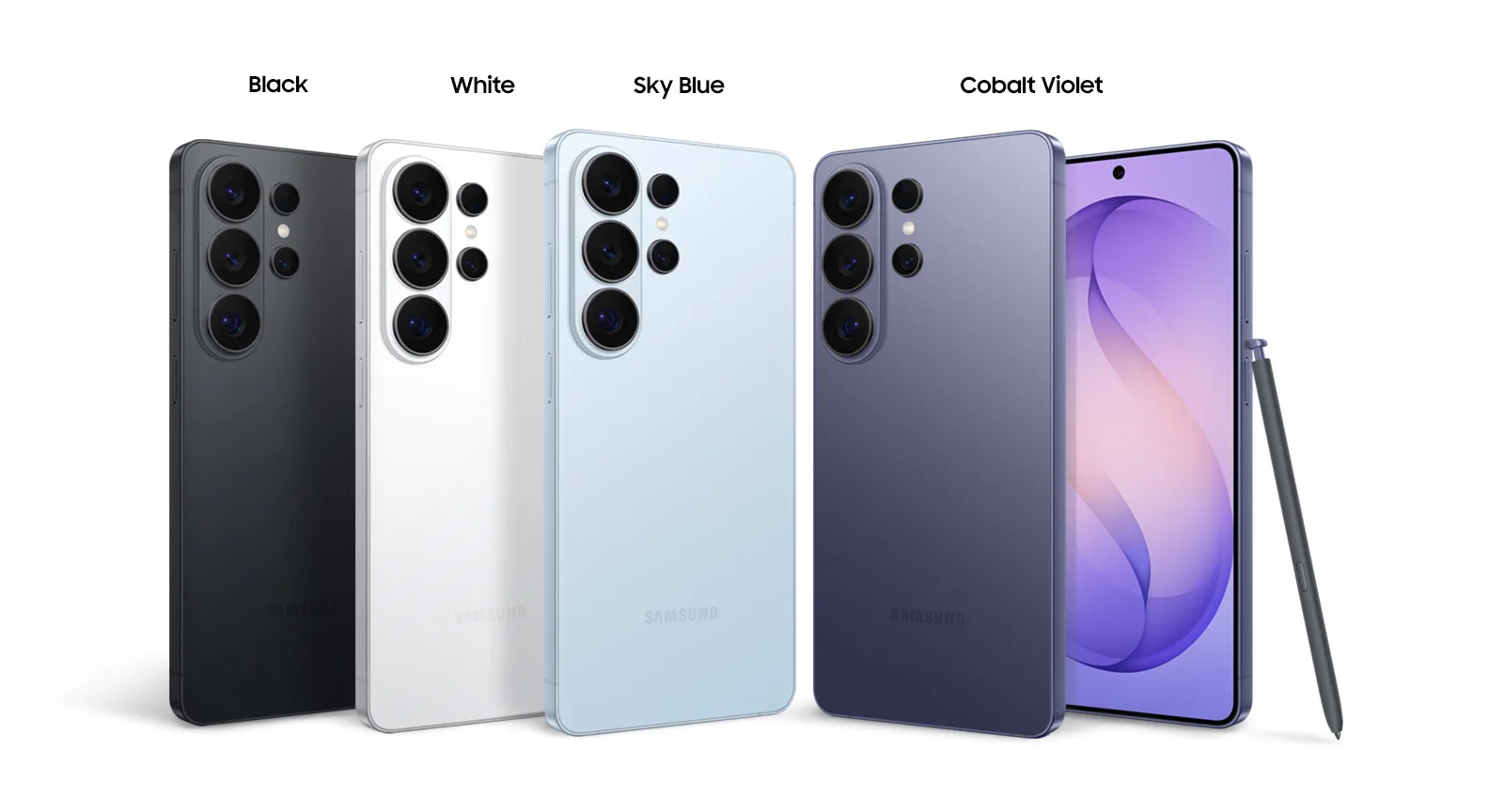
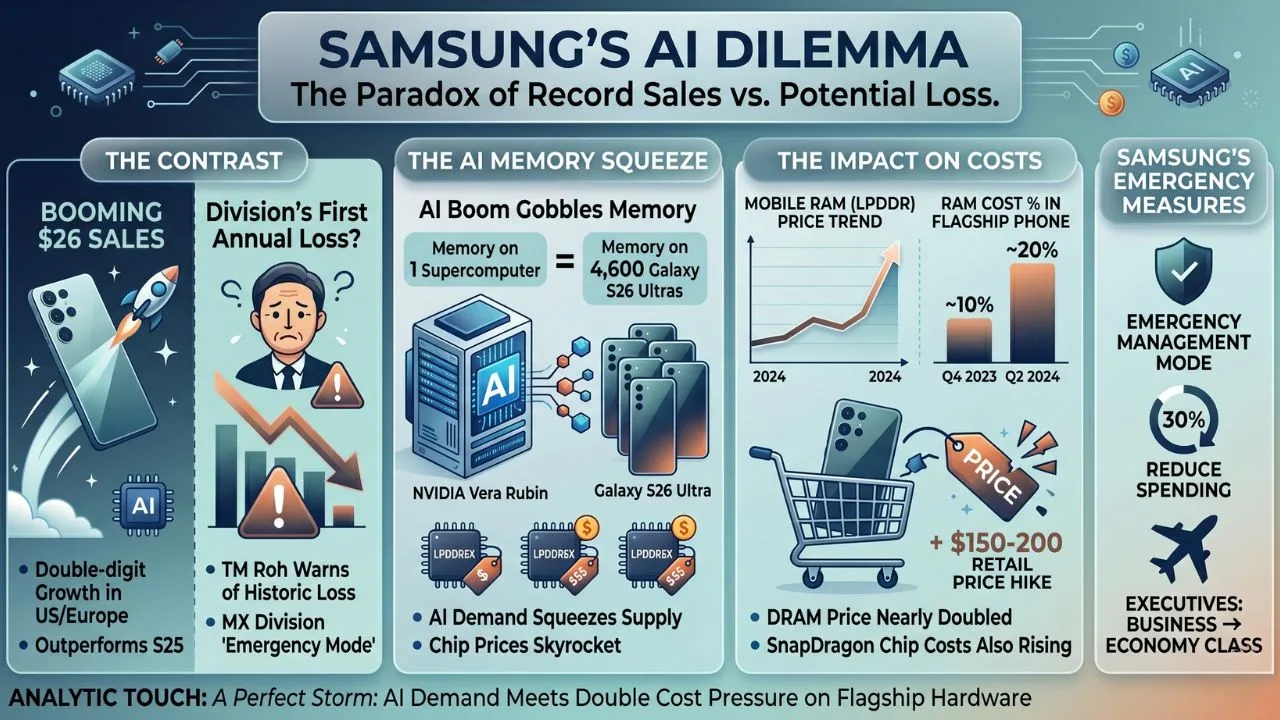
I’ve been covering Samsung for a long time, but I’ve never seen a situation quite this bizarre. On one hand, the Galaxy S26 series is absolutely crushing it—we’re talking double-digit growth in the US and Europe. But behind the scenes? Samsung’s mobile boss, TM Roh, is sounding the alarm on a potential history-making disaster: the division’s first-ever annual loss.
You’d think record sales would mean record profits, right? Not this time. Here is the breakdown of why the AI boom is actually making your next phone a lot more expensive to build—and buy.
The “AI Tax”: Why Memory Prices are Exploding
The same AI wave that gives us cool features on our phones is currently cannibalizing the parts needed to build them. Supercomputers from companies like NVIDIA are “inhaling” global memory supplies at an alarming rate.
-
The Comparison: A single NVIDIA Vera Rubin supercomputer uses as much RAM as 4,600 Galaxy S26 Ultras.
-
The Price Jump: LPDDR (mobile RAM) prices nearly doubled in Q1, with another 80% hike expected in Q2.
-
Cost Share: In a flagship phone, RAM usually accounts for about 12% of the cost. Right now? It’s hitting 20%.
Why it matters: When the cost of a single component doubles, manufacturers have two choices: eat the loss or pass it to you. We are looking at a potential $150–$200 retail price hike for upcoming flagships just to cover the memory and the rising cost of Snapdragon chips.
Emergency Mode at Samsung HQ

-
Spending Cuts: A mandated 30% reduction in total spending.
-
No More Business Class: Even top executives are being swapped from business class to economy for travel.
-
Supply Squeeze: It’s not just the price; manufacturers are literally struggling to find enough chips to put in the boxes.
Why it matters: When a tech giant like Samsung cuts spending this aggressively, it often leads to slower innovation cycles or “safe” hardware refreshes. We might see fewer “experimental” features in the next year as they focus purely on survival.
The Looming “Double Pressure”
It’s a perfect storm. While memory prices are skyrocketing, Qualcomm’s flagship Snapdragon chips are also getting pricier. Samsung is caught in a pincer move between high component costs and a market that might push back against a $1,400 entry-level flagship.
-
NAND (Storage) prices: Also on the rise, following the DRAM trend.
-
Profit Contrast: Ironically, Samsung’s Chip Division is set for record profits because they are the ones selling this expensive memory to AI giants—even if it hurts their own phone business.
What This Means For You
If you’ve been on the fence about upgrading, you might want to pull the trigger sooner rather than later. With component contracts resetting, the price of phones hitting shelves in the second half of this year and early 2027 is likely to climb significantly.
I’ll be watching the Q2 earnings call closely to see if Samsung can pivot, or if the “AI Tax” is here to stay. Are you willing to pay $200 more for your next flagship, or has the price ceiling finally been reached?


