


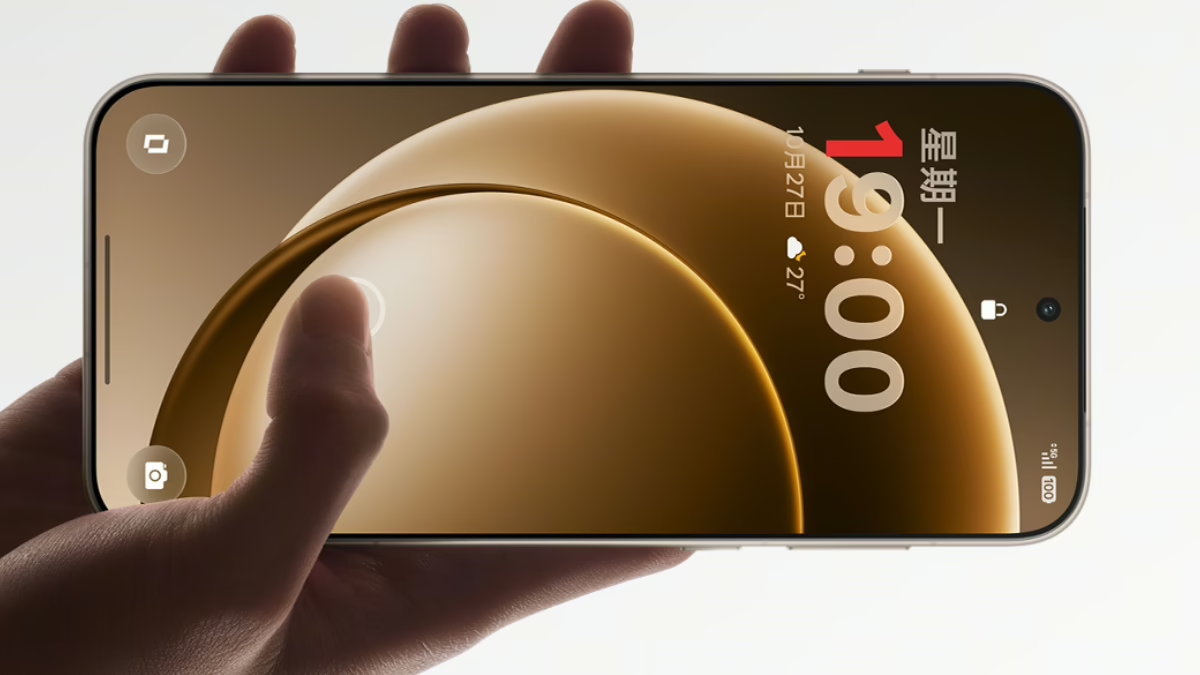
I’ve been tracking some whispers from the supply chain lately, and it looks like we are about to hit a major milestone for mobile displays. The prolific leaker Digital Chat Station just dropped a hint that a major manufacturer—almost certainly OPPO or its subsidiary OnePlus—is currently testing a flagship phone with a massive 1.5K resolution paired with a 165Hz ultra-high refresh rate. While we’ve seen 165Hz on dedicated gaming phones before, seeing this tech migrate to mainstream flagships is a total game-changer for how smooth your phone is going to feel.
Display & Performance
The real story here isn’t just a faster screen; it’s about how this “Oriental Screen” tech handles high-intensity tasks. OnePlus has already been laying the groundwork with models like the OnePlus 15, but this new push toward a 165Hz ecosystem means they are serious about making lag a thing of the past. If you’ve ever used a 120Hz screen, you know how hard it is to go back to 60Hz. Jumping to 165Hz offers that same level of “fluidity” but at a competitive edge. It’s not just for scrolling through Twitter; it’s about reducing input latency to the point where the phone feels like an extension of your hand.
Gaming & Real-World Impact
Why does this actually matter for you? OnePlus China President Li Jie has been pretty vocal about this, explaining that 165Hz is all about precision. In fast-paced shooters like Call of Duty Mobile or Delta Force, those extra frames allow you to spot an enemy a fraction of a second earlier. In MOBA games like League of Legends: Wild Rift, it’s about capturing every animation frame perfectly so you don’t miss a beat during a chaotic team fight.
-
Native Support: Games like Wild Rift and Dark Zone are already optimized for these native high frame rates.
-
Widespread Adoption: Expect this 165Hz standard to trickle down to the OnePlus Ace 6 and Turbo series soon.
It’s clear that the “spec war” isn’t just about megapixels anymore; it’s about who can give you the most responsive screen on the market. If this leak holds true, the next generation of flagships is going to make current phones look like they’re running in slow motion.
Let’s see how this performs in real-world use once the first units hit the shelves.
