





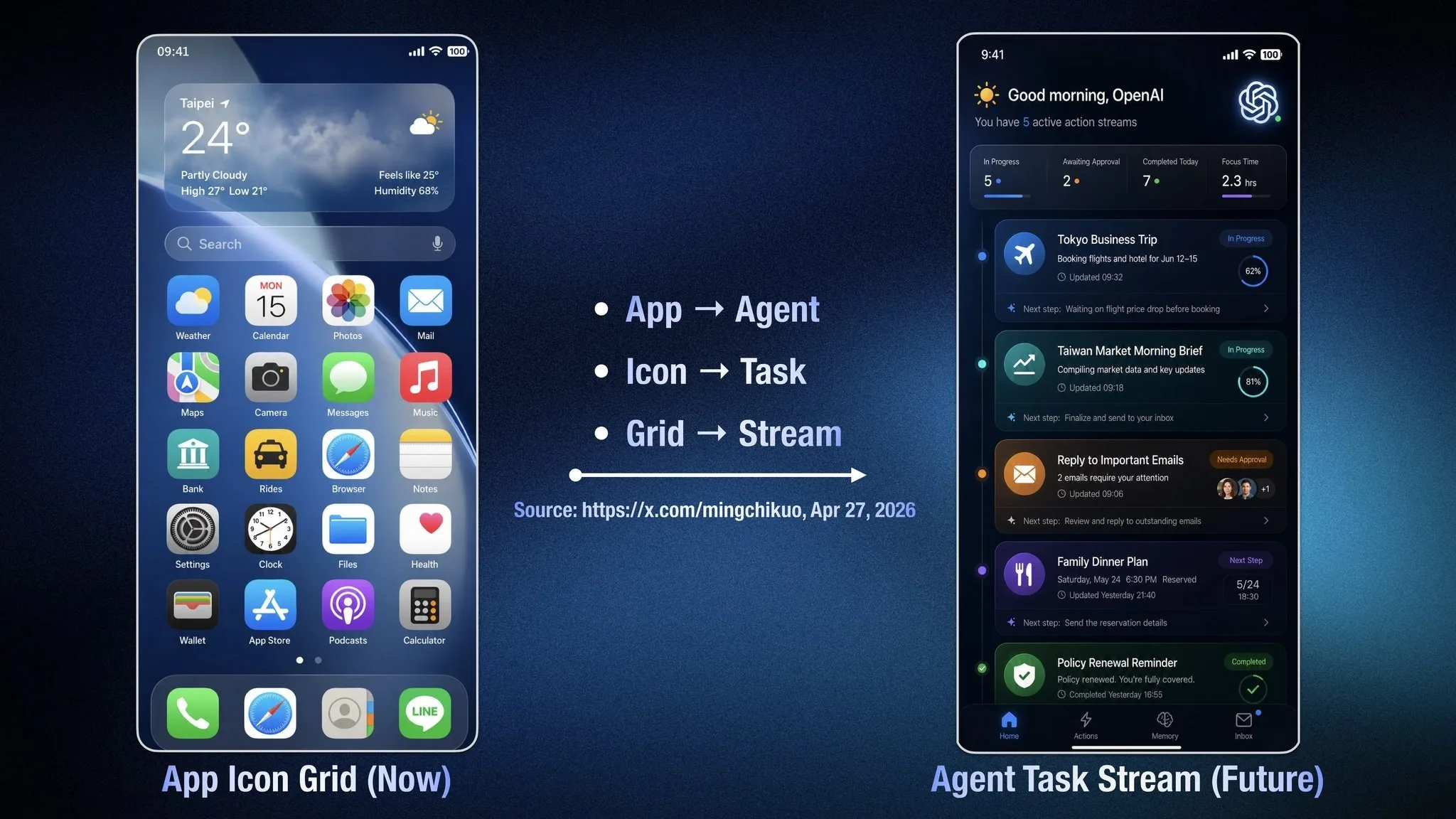
I’ve been tracking some wild industry whispers lately, but this is the big one. It looks like OpenAI is officially moving beyond your browser and into your pocket. We aren’t just talking about a ChatGPT app anymore; we’re talking about OpenAI-branded hardware designed to fundamentally change how you use a phone. mass production is slated for 2028, and the partnerships involved are heavy hitters.
The “Brain”: Custom Silicon with Qualcomm & MediaTek
OpenAI isn’t just buying off-the-shelf chips. They are reportedly co-developing custom processors with Qualcomm and MediaTek.
-
The Strategy: By designing their own silicon, OpenAI can optimize for “Real-Time Inference”—basically making sure the AI reacts as fast as you think.
-
The Manufacturers: Luxshare has been tapped as the exclusive co-design and manufacturing partner.
-
The Timeline: Specs and suppliers should be locked in by late 2026 or early 2027.
The Vision: Death to the “App Pile”
Here’s the thing: You don’t actually want to scroll through a folder of 50 apps to get things done. You just want the task finished. OpenAI’s phone is built around the AI Agent—a system that understands your needs and executes them across a seamless interface.
-
Context is King: The phone will use On-Device AI for continuous, low-power understanding of your “state” (where you are, what you’re doing, what you need next).
-
Cloud Hybrid: Simple tasks happen on your phone; heavy-duty compute is beamed to OpenAI’s massive cloud servers.
-
Why it matters: This isn’t just a phone with an AI button. It’s a total UI reset. Imagine an iPhone, but instead of a grid of icons, it’s a fluid workspace that anticipates your next move.
Why Would OpenAI Make a Phone?
You might wonder why a software giant would bother with the “hardware headache.” It comes down to three things:
-
Total Control: To build a true “AI Agent,” you need to own the Operating System and the hardware.
-
Real-Time Data: The smartphone is the only device that knows your “real-time state” 24/7.
-
Scale: Smartphones are still the biggest device category on Earth. If you want to dominate AI, you have to live in the pocket.
The Business Move: Subscriptions Over Sales
Don’t expect a traditional “buy the phone and walk away” deal. OpenAI is likely looking at a subscription-bundled hardware model. Think of it as a “ChatGPT Pro” membership that happens to come with the world’s smartest phone.
-
Market Impact: If they target the high-end segment (the 300–400 million people who buy flagship phones), it could trigger a massive replacement cycle that hasn’t been seen since the first iPhone.
My Take: Is the “iPhone Era” Ending?
To be honest, the smartphone has felt “stale” for a few years. We’ve been stuck in the same app-grid loop since 2007. OpenAI’s play is a massive gamble, but it’s the first time in a decade that someone is trying to reinvent the logic of a phone, not just the camera lens.


