





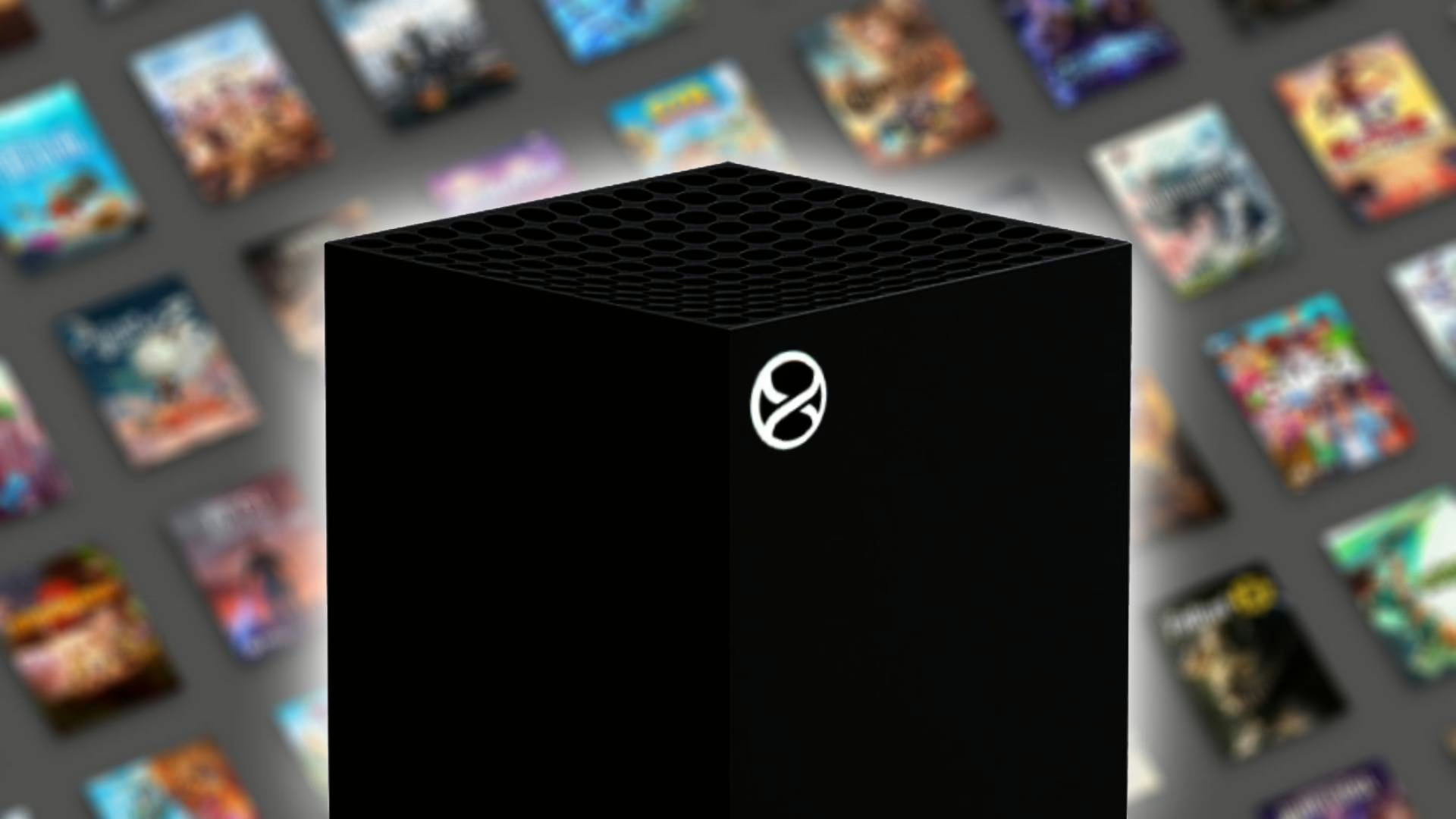
I’ve been tracking the rumors surrounding Microsoft’s next move for a while, but the latest leaks on Project Helix feel like a genuine shift in how we’ll think about “consoles” forever. We aren’t just looking at a spec bump here; Microsoft is essentially trying to kill the barrier between the PC and the living room. If the reports are accurate, this isn’t just an Xbox—it’s a high-end gaming rig trapped in a console’s body, and it’s aiming to outperform almost everything under your desk right now.
Desktop Power in a Living Room Box
The raw hardware under the hood is where things get wild. I’m seeing reports of a custom AMD 3nm chip that doesn’t just iterate on the Series X—it leaps past it. We’re talking about an RDNA 5 GPU that supposedly goes toe-to-toe with Nvidia’s unreleased RTX 5080 in standard gaming and might actually beat the behemoth RTX 5090 when it comes to ray tracing. To help manage all that heavy lifting, Microsoft is leanining into a dedicated Neural Processing Unit (NPU).
For you, that means more than just “pretty graphics.” It means:
-
AI-driven NPCs that actually react like humans instead of following a script.
-
FSR Diamond technology for upscaling that makes 4K look native without killing your frame rate.
-
Radiance Cores dedicated to making lighting and reflections look photorealistic.
The Hybrid Gamble and Your Wallet
What really fascinates me is the “Xbox Mode” for Windows. Microsoft wants Project Helix to run both Xbox and PC games natively. Imagine having the plug-and-play simplicity of a console but with the massive library and flexibility of a PC. It’s a dream for anyone tired of managing drivers but who still wants Steam-level variety. However, that “best of both worlds” approach comes with a massive catch: the price. We’re hearing whispers of a $900 to $1,200 price tag. While Sony seems to be playing it safe by aiming for a $600 PlayStation 6, Microsoft is clearly pivotng toward the enthusiast who would normally spend two grand on a gaming PC.
The tech is rounded out by DirectStorage and ZSD compression, which basically aims to delete loading screens from existence. Plus, for those of us with massive digital shelves, it’ll still support four generations of backward compatibility. It’s a bold, expensive bet on the future of the ecosystem, positioning the next Xbox as a premium powerhouse rather than a budget-friendly toy.


