


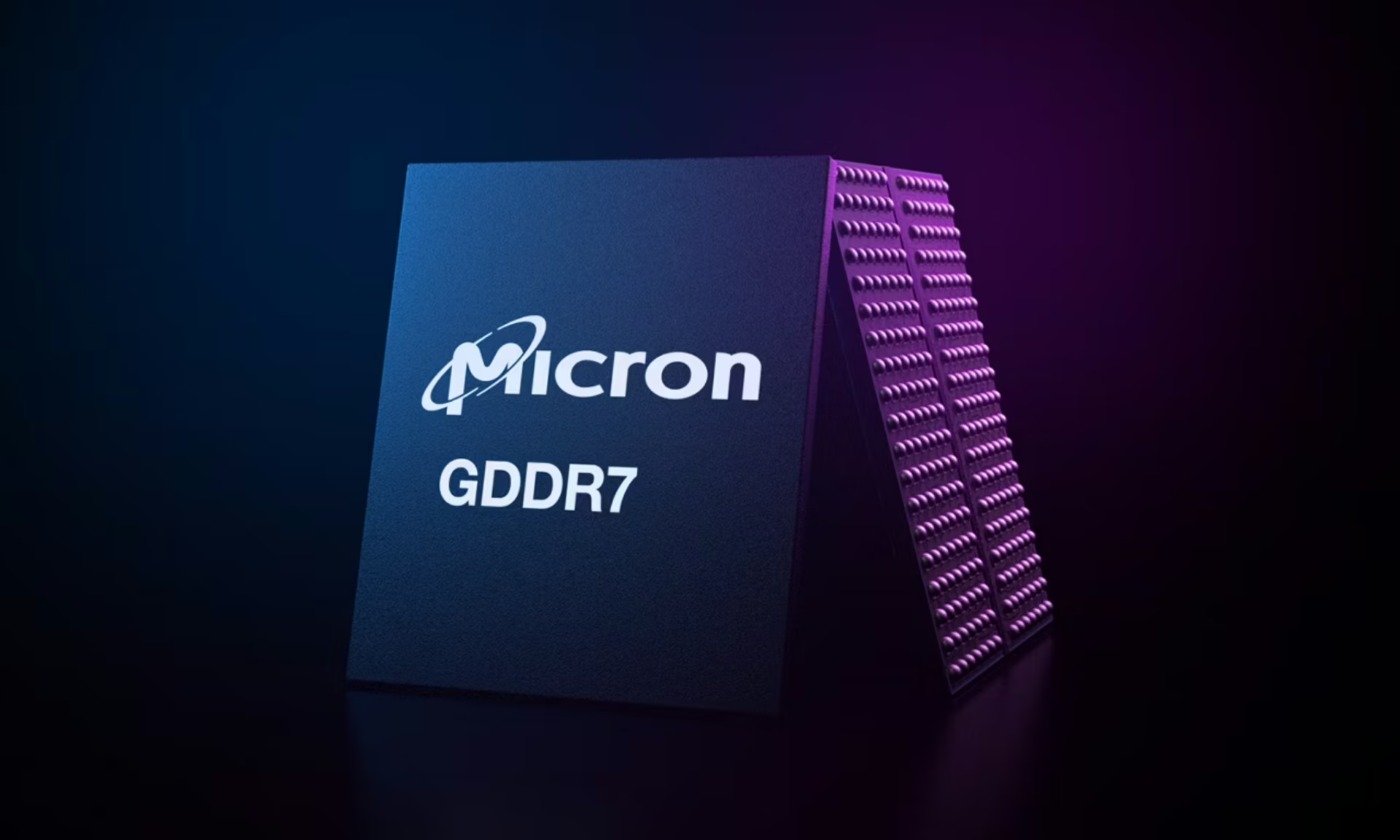
If you thought the RTX 5090 was the peak of GPU performance, I’ve got some news that might make your current rig feel a little “last-gen.” Micron just pulled back the curtain on its next-gen GDDR7 memory, and the numbers are absolutely wild.
We aren’t just looking at a minor bump; we’re talking about 36 Gbps speeds and 24Gb densities. For those of us who hate texture pop-ins and stuttery AI frames, this is the hardware breakthrough we’ve been waiting for.
The Speed Revolution: 36 Gbps is the New Gold Standard
I noticed that while the current RTX 5080 is impressive at 30 Gbps, Micron is already looking to leave it in the rearview mirror.
-
The Boost: We’re looking at a 20% increase in bandwidth and a 50% jump in capacity compared to what’s on shelves right now.
-
Why it matters: Higher bandwidth means your GPU doesn’t have to “wait” for data. Whether you’re rendering a 4K open world or running a local LLM, this extra speed removes the bottleneck that causes those annoying micro-stutters.
Gaming Benefits: Goodbye, Texture Pop-In
Micron made a point to highlight that this isn’t just for AI researchers; it’s a massive win for gamers.
-
Asset Swapping: By keeping more data “resident” in the VRAM, the system doesn’t have to constantly swap textures in and out.
-
High-Res Buffers: It supports much larger frame buffers, which is essential if you’re eyeing a 5K or 8K display.
-
Ray Tracing: Real-time lighting demands massive datasets. GDDR7 keeps the “lighting maps” and “geometry sets” ready to go, ensuring smooth frame times even in the most intense scenes.
The AI Angle: Faster Inference on Your Desk
You and I both know that AI is eating the world, and Micron is leaning into it.
-
On-Device AI: This memory enables faster “inference”—meaning your AI image generators or chatbots will respond significantly quicker.
-
Neural Graphics: It provides the throughput needed for “generative AI” models that help upscale your games in real-time.
Technical Specs: What to Expect
Check out how these 36 Gbps modules scale across different GPU tiers:
-
128-bit (Entry Level): 576 GB/s | 12 GB VRAM
-
256-bit (High End): 1152 GB/s | 24 GB VRAM
-
384-bit (Enthusiast): 1728 GB/s | 36 GB VRAM
-
512-bit (The “Titan” Tier): 2304 GB/s | 48 GB VRAM
The “Analytic” Touch: When Can You Actually Buy This?
Here is the reality check: while Samsung has already started mass production, the industry is still dealing with some memory shortages. I expect to see these ultra-fast 36 Gbps chips show up in RTX 50-series “Super” refreshes or the next-gen “Rubin” GPUs toward the end of 2026 or early 2027.
If you’re planning a build right now, don’t panic—the current GDDR7 is still great—but if you’re a “spec-chaser,” just know that the ceiling is about to get a lot higher.
Keep an eye on the supply chain updates; as soon as these 24Gb modules become mainstream, we might finally see 12GB of VRAM become the absolute minimum for budget cards.
Are you more excited about the 48GB VRAM potential for AI, or are you just here for the 8K gaming frames?
Would you like me to track the latest pricing trends for GDDR7-based GPUs to see if now is the right time for you to upgrade?
