






I’ve been tracking smartphone market shifts for a while, but the latest data out of Southeast Asia from research firm Omdia caught me completely off guard. We are witnessing a massive, unprecedented shift in how much people are spending on mobile devices.
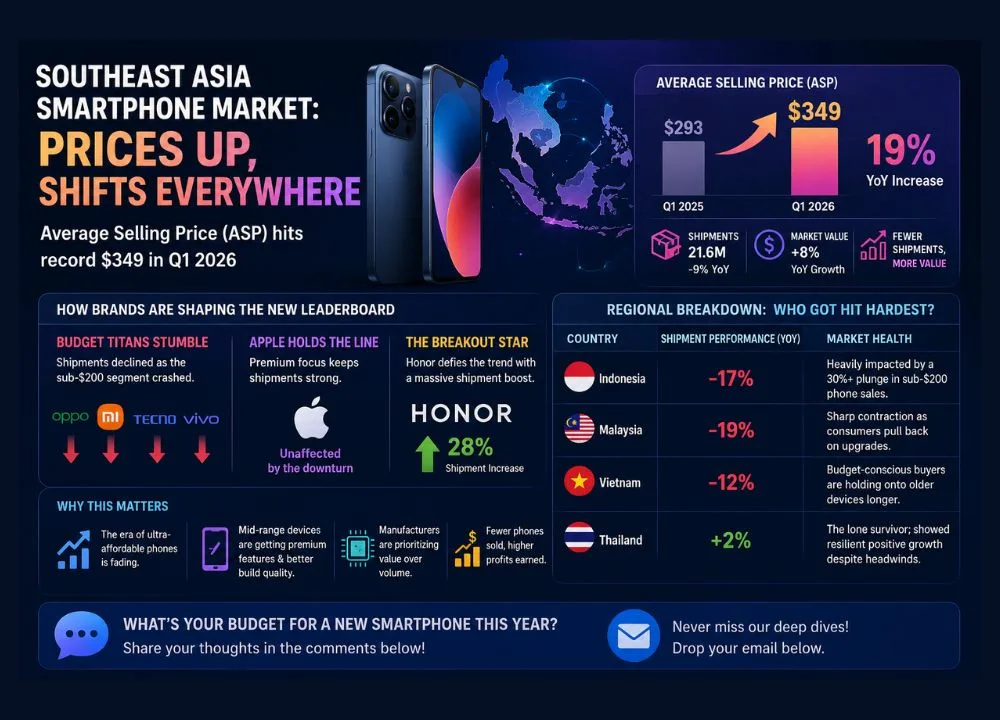
The average selling price (ASP) for smartphones in the region just skyrocketed by 19% year-over-year, hitting a record-breaking $349 in Q1 2026.
Here is why this is a huge deal, what it’s doing to your favorite brands, and what it means for the future of budget tech.
The Mid-Range Takeover (Goodbye, $200 Phones)
Historically, Southeast Asia has been a haven for ultra-affordable tech, with over 60% of the market traditionally buying devices priced under $200. But that era is facing a massive squeeze.
-
The Price Spike: The jump to a $349 average means consumers are either being forced into higher price brackets due to inflation and component costs, or they are actively choosing to premium-ize—buying devices that last longer.
-
The Shipment Drop: Because prices jumped so fast, total shipments fell 9% to 21.6 million units. People simply aren’t buying phones as frequently.
-
The Market Paradox: Even though fewer phones were shipped, the total market value still grew by 8%. In short: manufacturers are selling fewer devices but making more money per device.
How Your Favorite Brands Formed the New Leaderboard
This pricing surge has completely shaken up the competitive landscape, creating clear winners and losers among the top tech giants.
-
The Budget Titans Stumble: Brands that built their empires on affordable devices—OPPO, Xiaomi, Transsion, and vivo—all saw their shipment numbers take a hit as their core $200-and-under segment cratered.
-
Apple Holds the Line: Apple didn’t flinch. Because they solely occupy the premium tier, their shipments remained rock-solid and unaffected by the budget market crash.
-
The Breakout Star: Honor managed to defy the entire market trend, booking a massive 28% increase in shipments by successfully positioning themselves right in that sweet spot of affordable luxury.
Regional Breakdown: Who Got Hit Hardest?
The impact wasn’t uniform across the map. A quick look at the regional data shows exactly where the price hikes pinched the most:
| Country | Shipment Performance (YoY) | Market Health |
| Indonesia | 17% Decline | Heavily impacted by a 30%+ plunge in sub-$200 phone sales. |
| Malaysia | 19% Decline | Sharp contraction as consumers pull back on upgrades. |
| Vietnam | 12% Decline | Budget-conscious buyers are holding onto older devices longer. |
| Thailand | 2% Growth | The lone survivor; showed resilient positive growth despite headwinds. |
Why This Matters
This isn’t just a boring stat sheet; it’s a look at the future of the smartphone industry. For years, manufacturers chased high volume—selling millions of cheap phones with razor-thin margins. Now, that strategy is dying.
As entry-level devices get more expensive to build, brands are packing more premium features (like better cameras, OLED displays, and on-device AI) into mid-range phones to justify the higher price tags. You might be paying more upfront, but the baseline quality of a “standard” smartphone is going up significantly.
What’s your budget limit for a new daily driver this year? Let me know your thoughts, and make sure to drop your email below so you never miss our deep dives into the changing tech landscape.


