


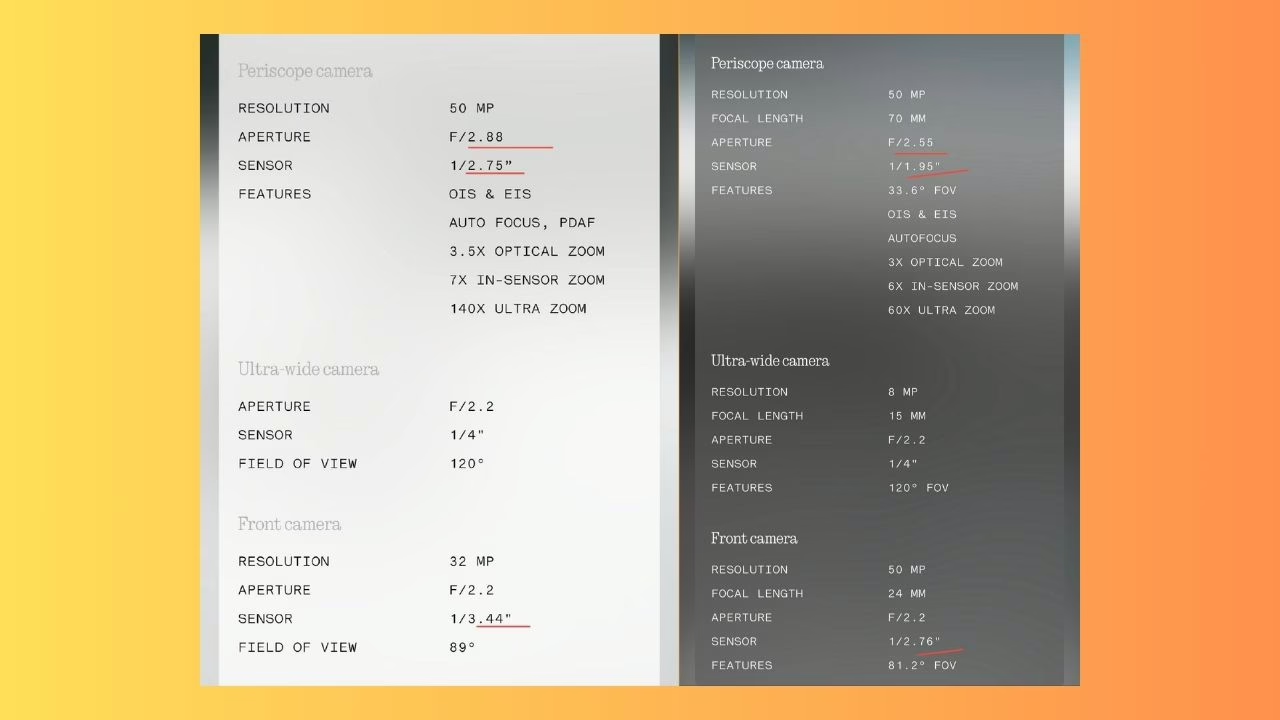
I noticed something really unexpected in the latest Nothing leaks, and if you were hoping for a major camera upgrade with the new series, you might want to sit down for this one. It looks like Nothing is taking a surprising step backward. Based on these leaked spec sheets, the Nothing 4a series is actually seeing a downgrade in both the periscope telephoto sensor and the front-facing camera compared to the previous 3a lineup.
Camera Hardware & Downgrades
I took a close look at the numbers, and the shift is pretty clear. On the Nothing 3a Pro, we had a solid 50MP periscope lens using the LYT-600 sensor (1/1.95″), which is known for decent light intake. However, the Nothing 4a Pro is moving to a 50MP JN5 sensor, which is physically smaller at 1/2.75″. A smaller sensor usually means more struggle in low light and less natural depth. Even the selfie game is taking a hit—the front camera is dropping from a 50MP (1/2.76″) sensor on the 3a Pro to a 32MP (1/3.44″) on the 4a Pro.
-
Telephoto Sensor: Downsized from 1/1.95″ (LYT-600) to 1/2.75″ (JN5).
-
Front Camera: Resolution dropped from 50MP to 32MP with a smaller sensor.
-
Optics: Both still retain OIS, but the raw hardware is definitely smaller this time around.
Zoom Limits & Regional Changes
Here is where things get a bit frustrating from a user perspective. It turns out the regular Nothing 4a and the 4a Pro actually use the exact same periscope sensor hardware. However, Nothing has decided to software-lock the zoom capabilities. While the 4a Pro can boast a massive 140X Ultra Zoom, the standard 4a is capped at 70X. It feels a bit artificial when the glass and sensor are identical. To make matters worse for my friends in India, it looks like NFC has been removed from the regular Nothing 4a in that region—a move that definitely stings given how common digital payments are becoming.
It’s an interesting strategy from Nothing, likely aiming to cut costs or push people toward the “Pro” branding through software features rather than hardware differences. While the zoom numbers look bigger on paper, the smaller physical sensors might mean the actual image quality doesn’t quite live up to the hype of the 3a series.
Let’s see how this performs in real-world use once we get the chance to test those new sensors side-by-side.
