
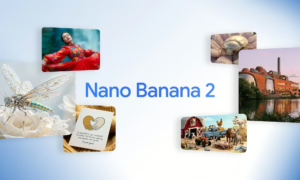



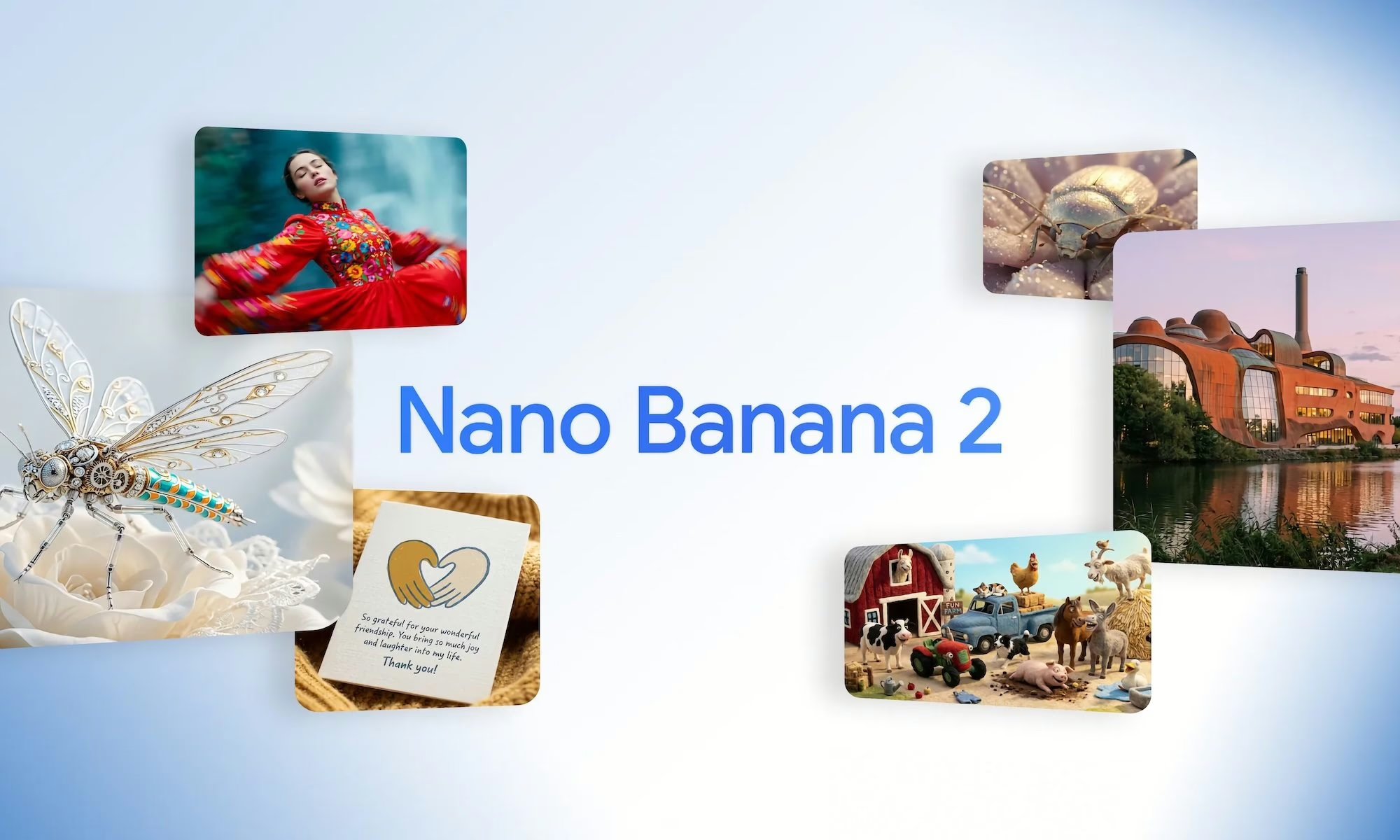
I’ve been tracking the AI image space for a while, and Google just dropped a massive update that finally feels like it’s built for the way we actually work. They’re calling it Nano Banana 2—though the official name is Gemini 3.1 Flash Image—and it’s a strategic pivot away from just “making cool pictures” toward high-speed, production-grade tools.
If you’ve ever sat around waiting for an AI to render a simple edit while a deadline loomed, you’ll understand why this matters. Google is essentially taking the “brain” of its massive Pro models and stuffing it into a leaner, faster “Flash” architecture to give us near real-time creative iteration.
Speed & Real-World Grounding
The most immediate change you’ll notice is the drastic reduction in latency. I noticed something interesting during the demo: the gap between hitting “generate” and seeing a result has almost vanished, which is a total game-changer for designers and marketers who need to cycle through dozens of versions in a single sitting. But speed isn’t the only story here.
Google is finally leveraging its biggest superpower—Search integration. By grounding the AI in live web data, Nano Banana 2 can generate visuals of real locations or current events with much higher accuracy. This means fewer “hallucinations” where a famous landmark looks slightly “off,” making it a much more reliable tool for actual commercial work.
Precision Text & Scene Consistency
If you’ve ever tried to get an AI to spell a simple word correctly, you know the struggle. One of the biggest technical breakthroughs in this version is precision text rendering. We’re finally seeing legible, sharp typography that doesn’t look like an alien language, which opens the door for using these images directly in ad mockups and branded social content. Beyond that, Google has tackled the headache of subject consistency.
If you’re trying to tell a story or build a campaign, you need your character to look the same across ten different scenes. Nano Banana 2 is much better at maintaining that visual thread, solving a problem that has plagued models like Midjourney and DALL-E for years.
-
Model: Gemini 3.1 Flash Image (Nano Banana 2)
-
Key Tech: Improved Text Fidelity & Subject Consistency
-
Availability: Rolling out in 141 countries across Gemini and Search
-
Integration: Real-world grounding via Google Search data
By embedding this tech directly into the Google ecosystem—from Search to the new Flow workspace—Google isn’t just trying to win a spec war against OpenAI; they’re trying to make AI image generation a standard part of your daily workflow. It’s less about the novelty of AI art and more about production-grade reliability and sheer horsepower.


