


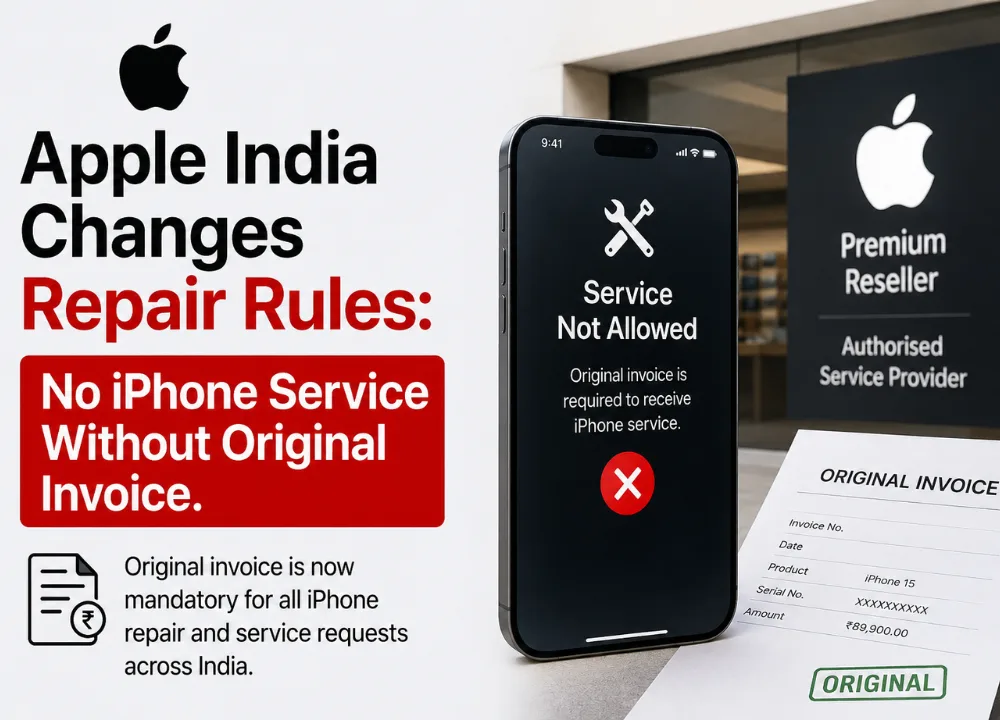
If you are using an iPhone in India right now, I just noticed an unexpected service policy update that you absolutely need to know about. It looks like Apple India is quietly hardening its stance on out-of-warranty repairs, and it’s catching a lot of users completely off guard.
According to a recent leak and interaction shared by tech creator TechDroider, Apple Support India has started flatly refusing to accept iPhones for service or repair if you cannot produce a proper, valid purchase invoice.
Yes, even if your phone is years old and you are entirely willing to pay out-of-pocket for a repair, no bill means no service.
The New “No Invoice, No Service” Mandate
Look, I get what Apple is trying to do here. On paper, it makes total sense to block stolen or blacklisted phones from getting fixed. But enforcing a rigid, paper-receipt-or-nothing rule for a device you’ve owned for four years? To be honest, it’s just a massive headache for regular people who just want their phones to work.
If you try to take your device to an Apple Authorized Service Center, you might face immediate rejection under these common scenarios:
-
The Legacy Problem: Your iPhone is 4 to 5 years old, and you naturally threw away or misplaced the retail box and receipt years ago.
-
The Pre-Owned Market: You bought a refurbished or second-hand iPhone from a local brick-and-mortar store that only gave you an informal, handwritten receipt.
-
Gifted Devices: A family member passed down their older flagship device to you without handing over the original paperwork.
Why Verified Hardware is Being Blocked
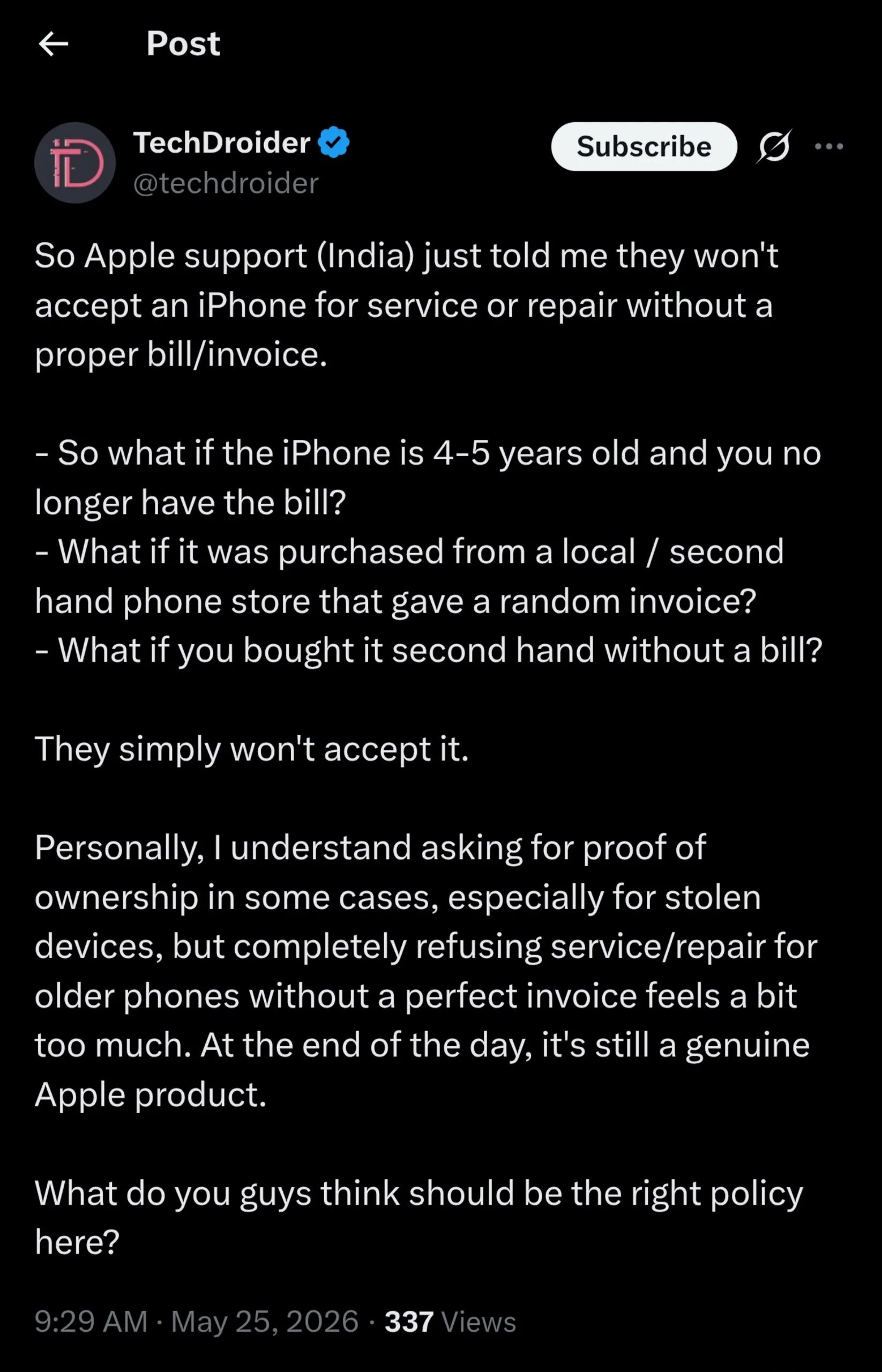 Here is my analytical take on why this policy feels unnecessarily harsh: An iPhone can already prove its own identity. Every single genuine Apple product carries a unique Serial Number and IMEI. Apple’s internal systems can instantly verify if a device is authentic, check its activation history, and see if it is locked to an active iCloud account. Turning away premium, genuine hardware just because of a missing PDF or piece of paper feels incredibly counterintuitive.
As TechDroider perfectly put it:
“Completely refusing service/repair for older phones without a perfect invoice feels a bit too much. At the end of the day, it’s still a genuine Apple product.”
The Right to Repair Impact
Why this matters: This rigid policy is hitting right when the global “Right to Repair” movement is picking up major steam in India.
Here’s the thing: blocking people from official Apple stores isn’t going to stop them from fixing their phones. It just forces them to visit that sketchy, unauthorized shop around the corner. Long story short? Apple is actively driving its own customers away. And that ironically creates a much bigger mess—we’re talking third-party knockoff screens, security risks, and cheap batteries that might literally bloat or catch fire.
Instead of a blanket ban, Apple needs to introduce smarter verification methods—like letting a user prove ownership on the spot by logging into the linked Apple ID or verifying the device’s clean status via automated diagnostic tools.
Apple India hasn’t issued an official public statement regarding this strict verification protocol for legacy devices just yet.
If you are planning a trip to the Genius Bar anytime soon, make sure you dig through your email to find that original digital receipt first.

