


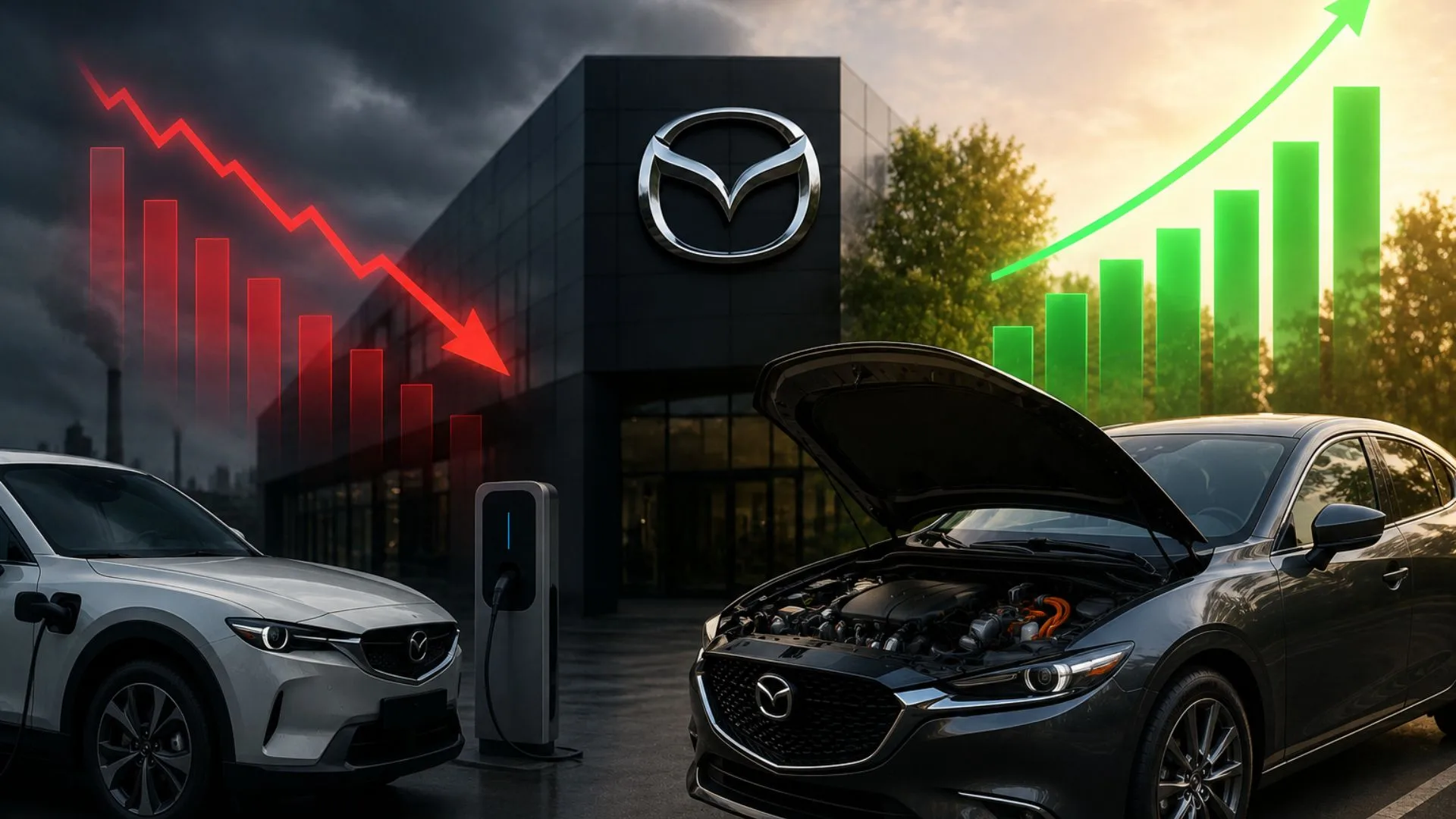
The automaker just slashed its electric vehicle investment by a massive 20 percent, dropping the budget down to 1.2 trillion yen (about Rs 64,000 crore) through 2030. That’s a huge step backward from what they originally promised us.
And if you were waiting for their first fully in-house electric car, don’t hold your breath. They’ve pushed the launch back to 2029. Yes, that makes it the second time this project has been delayed. Long story short? Mazda is playing it incredibly safe. They’re watching other major brands hemorrhage cash on EVs right now, and honestly, they’d rather just sit this round out than lose their shirts.
New Plans for Engines and Hybrids
Mazda is betting on hybrids instead of going all-in on batteries. Look, they know that most people in places like India and even America still prefer cars with engines. Honestly, I think it is a smart move for their wallet. Wait, before we get into the specs, you should know that they are only aiming for 15 percent of their sales to be electric by 2030.
- They will launch four new hybrid cars by 2027 to replace older models.
- A new hybrid version of the famous CX-5 SUV is coming very soon.
- They are building a new Skyactiv-Z four-cylinder engine for better mileage.
- This new engine tech will go into the CX-50 and CX-60 car lineups.
How Mazda Plans to Sell Electric Cars Now
You might be wondering if Mazda will even sell any cars before 2029. Well Mazda has a trick for that up their sleeve. Mazda is partnering with a company called Changan to build electric cars like the Mazda6e. This helps Mazda keep costs down because Mazda does not have to build everything from scratch when it comes to cars, like the Mazda6e.
- They will use a lean asset strategy to avoid spending too much on factories.
- Mazda will sell these Chinese-made electric cars in Europe and Australia first.
- By being a follower, they save money on research that often fails.
- The company expects their profits to triple because they are not wasting cash.
Why This Change is Happening in the Industry
I have seen this trend with other Japanese brands like Toyota too. They call it a multi-pathway approach. That is just a fancy way of saying they want to keep all their options open. While electric car sales are falling in some countries, hybrid sales are actually growing by 37 percent. People want the better fuel economy of a hybrid without the worry of finding a charging station. Mazda is following the money. By focusing on what people are actually buying today, they stay healthy while waiting for battery tech to get cheaper.
My Verdict
Mazda is playing a very cautious game that might actually pay off. While enthusiasts might find the 2029 delay boring, it protects the company from going broke. For a regular buyer in India, this means we will likely see more reliable hybrids from them rather than expensive electric cars that are hard to maintain. I feel this practical approach is better for their long-term survival in a very confused global market.
