


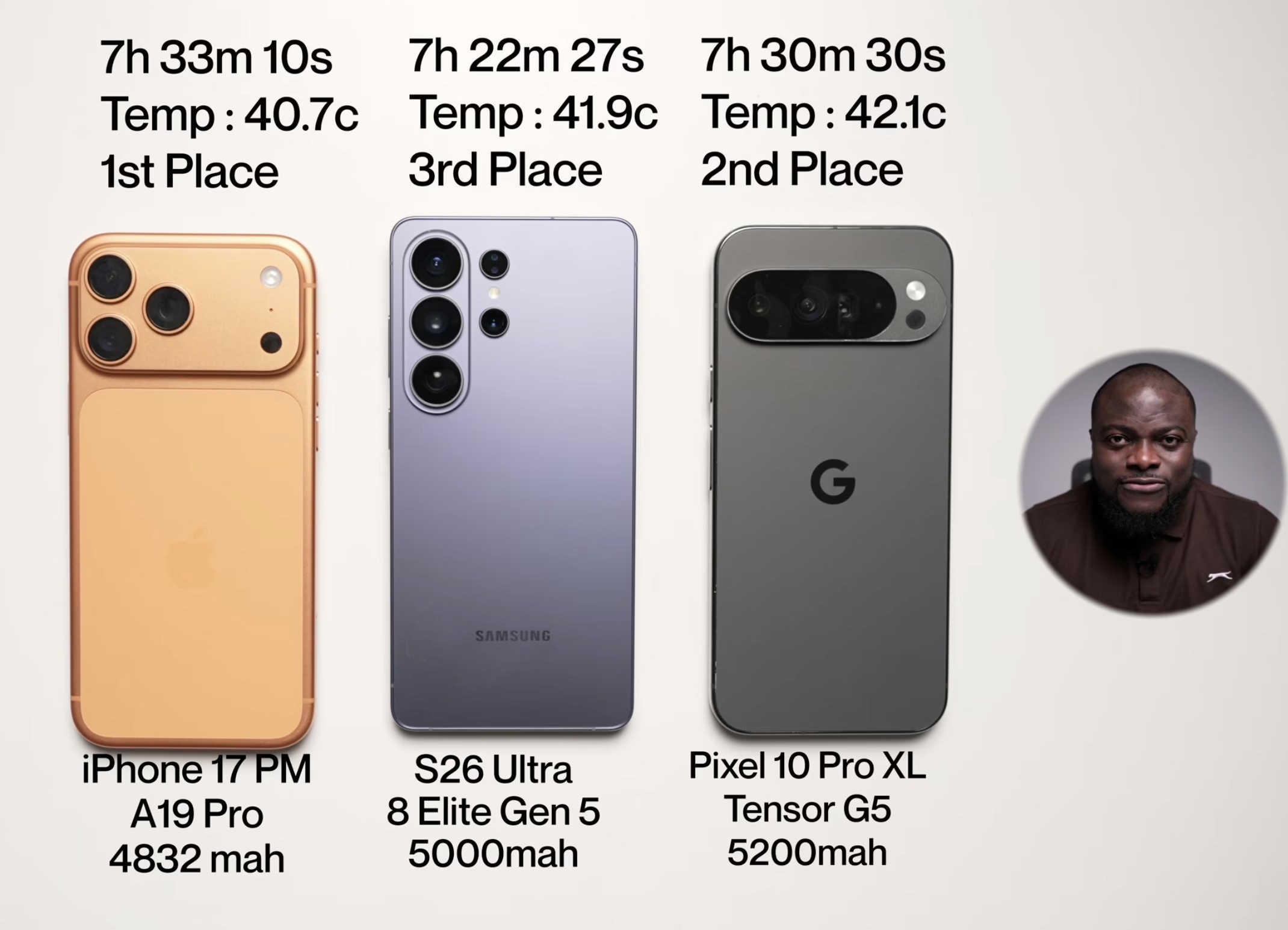
To be honest, if you looked at the spec sheets for 2026’s biggest flagships, you’d bet your house on the Samsung Galaxy S26 Ultra winning any battery fight. It’s packing the brand-new Snapdragon 8 Elite Gen 5, a chip that’s supposed to be the pinnacle of efficiency. Meanwhile, Google is still doing its own thing with the Tensor G5, a processor series historically known for running a bit hot.
But as Lover Of Tech just proved in his latest drain test, specs on paper don’t mean a thing in the real world.
The Results That Should Worry Samsung
Here’s the thing: despite having a “less efficient” brain, the Google Pixel 10 Pro XL actually outlasted the S26 Ultra. Think of it this way—Samsung has the better engine, but Google’s software seems to be driving the car much more carefully.
| Device | Chipset | Battery Size | Result | Final Temp |
| iPhone 17 Pro Max | A19 Pro | 4832 mAh | 7h 33m (1st) | 40.7°C |
| Pixel 10 Pro XL | Tensor G5 | 5200 mAh | 7h 30m (2nd) | 42.1°C |
| S26 Ultra | 8 Elite Gen 5 | 5000 mAh | 7h 22m (3rd) | 41.9°C |
Why Did This Happen?
Look, here’s the real deal: Samsung’s OneUI 8 is starting to feel a bit bloated. Even though the S26 Ultra kept its cool at 41.9°C, it just didn’t have the stamina to outlast the Pixel. It’s actually kind of wild that Google’s phone stayed alive for an extra eight minutes, especially since its display usually eats through battery way faster.
Then you’ve got Apple, and to be honest, the iPhone 17 Pro Max is still the one to beat when it comes to efficiency. It’s packing the smallest battery of the group at 4832 mAh, but it still walked away with the crown. We’re talking over 7.5 hours of screen time while staying cooler than everyone else at the table. It just goes to show that size isn’t everything; it’s all about how the software handles the power.
The Bottom Line
If you’re a Samsung fan, this is a tough pill to swallow. You’re paying for the “Elite” silicon, but you’re getting third-place endurance. It’s clear that Google’s work on Android 16 and the Tensor G5 is finally starting to pay off, closing the gap that has existed for years.
Samsung might have the most features, but if the software is so bloated that it’s dragging down the hardware, is it even worth it?
