





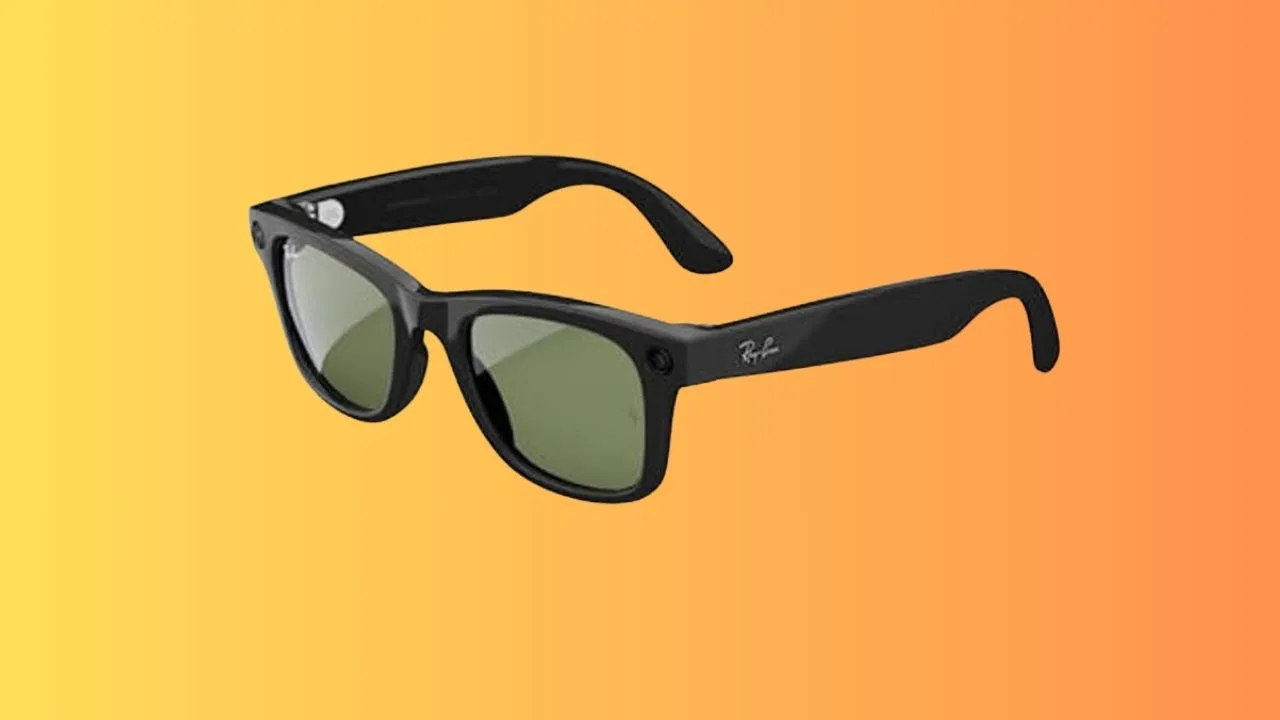
In the fast-paced world of 2026, wearable technology has moved from the fringes of “geek culture” to the faces of everyday consumers. Leading this charge are the Meta Ray-Ban Smart Glasses. However, as these glasses become a staple in the Indian tech market, a persistent and troubling rumor has surfaced: To get the full experience, you must own an iPhone, a Samsung, or a Google Pixel.
If you are holding an Oppo, Xiaomi, or Vivo flagship, you might be wondering if your ₹35,000+ investment is about to be “nerfed.” Let’s dismantle the myths, explore the technical hurdles, and decide once and for all if these glasses are a revolutionary tool or just a high-tech gimmick.
1. The Core Technology: How Meta Glasses Actually Communicate
Before we blame specific phone brands, we need to understand the “bridge.” Meta Ray-Ban glasses do not connect to your phone like a simple pair of Bluetooth headphones. They utilize a complex three-way communication system:
-
Bluetooth Low Energy (BLE): For constant “heartbeat” connection and voice commands.
-
Wi-Fi Direct: For high-speed transfer of 2K videos and high-res photos.
-
Meta Horizon App: The “brain” that lives on your phone and processes everything.
The Reality: The Meta Horizon App is available on both the Google Play Store and the Apple App Store. Technically, if your phone can run the app, it can run the glasses. There is no “hidden code” that disables the camera or speakers on a Xiaomi phone.
2. Why Apple, Samsung, and Google Feel “Better”
If the features are technically the same, why does the rumor exist? It comes down to Background App Management and Ecosystem Synergy.
The iOS Advantage (Apple)
Apple’s relationship with Meta is historically complicated, but the Meta Horizon app on iOS is highly optimized. Because Apple controls the hardware and software so tightly, the handshake between the glasses and the iPhone is nearly instantaneous.
The Samsung & Google “Privilege”
In 2026, Samsung and Google have integrated deeper “Fast Pair” protocols. When you open your Meta case near a Galaxy S26 or a Pixel 10, the phone recognizes it at a system level, not just an app level. This makes features like Auto-Sync (where photos move to your phone while it’s in your pocket) feel “magical.”
3. The “Chinese OEM” Challenge: Oppo, Vivo, and Xiaomi
If you use a phone running ColorOS, Funtouch OS, or HyperOS, you might encounter friction. This isn’t because the glasses hate your phone; it’s because of Aggressive Battery Optimization.
-
The “Killing” of Apps: Chinese smartphone brands are famous for their aggressive battery management. To save power, the system often “kills” the Meta Horizon app in the background.
-
The Result: You take a beautiful POV photo, but it doesn’t show up on your phone. You think the glasses are broken, but in reality, your phone just put the Meta app to sleep.
-
The Fix: You have to manually go into Settings > Battery > Background Activity and allow the Meta app to run without restrictions. Once this is done, a Vivo or Oppo phone performs almost identically to a Samsung.
4. Feature Breakdown: What Works and What Doesn’t?
| Feature | Apple / Samsung / Google | Oppo / Xiaomi / Vivo / Others |
| Photo/Video Capture | 100% Works | 100% Works |
| Meta AI (Voice) | Instant Response | Dependent on Background Activity |
| Music/Calls | Flawless | Flawless |
| Auto-Sync | Highly Reliable | Requires Manual Settings Tweak |
| Instagram Livestream | Seamless | Works (Needs stable 5G/Wi-Fi) |
5. Is it a Gimmick? The “Utility vs. Novelty” Debate
This is the most subjective part of the conversation. Whether the glasses are a gimmick depends entirely on your workflow.
Why it’s NOT a Gimmick (The Utility Case)
-
Content Creators: For vloggers, the POV (Point of View) angle is irreplaceable. It allows for “hands-free” storytelling that a smartphone cannot replicate.
-
The “Active” Lifestyle: If you are a cyclist, a chef, or a parent, being able to capture a moment or take a call without reaching for a slab of glass in your pocket is genuinely transformative.
-
Meta AI (The 2026 Update): With the latest multimodal updates, you can look at a monument in Delhi and ask, “What is the history of this place?” The glasses “see” what you see. That is not a gimmick; it’s the future of search.
Why it MIGHT be a Gimmick (The Novelty Case)
-
Battery Life: Even in 2026, these glasses struggle to last a full day of heavy recording.
-
Social Friction: The small LED light that indicates recording is still a point of contention. In many Indian social settings, wearing “recording glasses” can be seen as intrusive.
-
Audio Leakage: At high volumes, people standing next to you in a metro can hear your music or conversation.
6. The Indian Context: Regional Barriers
In India, the brand of your phone is actually less important than your Location and Connectivity.
-
Meta AI Availability: Meta AI features roll out in “waves.” Often, a user in Mumbai might have the “Look and Tell” AI feature, while someone in a smaller city might still be waiting, regardless of whether they have an iPhone or a Redmi.
-
5G Infrastructure: Since these glasses rely on the cloud for AI processing, the “lag” people experience is often due to network fluctuations in India rather than the phone’s brand.
7. Consumer Rights: The Transparency Gap
As tech journalists, we must hold brands accountable. Meta has been somewhat vague about the “minimum requirements” for a smooth experience. While they advertise “Universal Android Support,” the reality is that the user experience is fragmented.
The Verdict for the Buyer:
-
If you have an iPhone or Samsung: You get a “Set it and forget it” experience.
-
If you have an Oppo, Vivo, or Xiaomi: You get the exact same features, but you must be tech-savvy enough to lock the app in memory and disable battery optimizations.
Final Thoughts: Should You Buy Them?
The Meta Ray-Ban Smart Glasses are the most successful wearable of the decade because they look like actual glasses. They are not a gimmick for anyone who values “living in the moment” while still capturing it.
Don’t let the “Brand Elitism” discourage you. If you have a modern smartphone from any reputable brand—be it Xiaomi or OnePlus—you can enjoy the full suite of Meta’s innovations. Just remember to dive into your settings and give the app the “permission to live” in the background.
The future is on your face, not just in your pocket.
Quick Checklist Before You Buy:
-
OS Version: Ensure you are on Android 10/iOS 15 or higher.
-
Bluetooth: Your phone should ideally support Bluetooth 5.2 or 5.3 for lower latency.
-
The App: Download the “Meta Horizon” app first to see if your device is compatible.
Frequently Asked Questions: Meta Ray-Ban Smart Glasses
1. Is it true that these glasses only work with iPhone and Samsung?
No. This is a common misconception. The glasses work with any smartphone that can run the Meta Horizon app (available on Android 10+ and iOS 15+). While Apple and Samsung offer slightly more “seamless” background syncing due to their software architecture, users of Oppo, Vivo, Xiaomi, and OnePlus can access the exact same features by simply adjusting their battery optimization settings to allow the Meta app to run in the background.
2. Does Meta AI work in India?
Yes, but with caveats. As of 2026, Meta AI has seen a wide rollout in India. Basic voice commands (e.g., “Hey Meta, take a photo”) work flawlessly. However, advanced “Multimodal” features (where the glasses identify objects you are looking at) are being released in phases. If you don’t see it yet, it’s likely a server-side update from Meta rather than a limitation of your phone.
3. Can I use these as my primary prescription glasses?
Absolutely. You can order these with prescription lenses (Single Vision, Progressive, or Transition). In India, many high-end opticians now offer lens fitting for the Ray-Ban Meta frames, so you don’t have to choose between seeing clearly and filming POV content.
4. How long does the battery actually last?
In a real-world “tech-heavy” scenario:
-
Recording: About 3–4 hours of intermittent capture.
-
Audio/Music: About 4–5 hours.
-
Standby: The charging case provides up to 32 hours of total power. If you are vlogging a full day in Delhi or Mumbai, you will definitely need to put them back in the case during lunch for a quick top-up.
5. Is it legal to record people in public with these?
There is no specific law in India banning smart glasses, but privacy ethics apply. The glasses have a bright LED “Capture LED” that lights up when recording. Covering this LED is a violation of Meta’s Terms of Service and can lead to your account being flagged. Always be mindful of “Privacy Zones” like washrooms or private residences.


