


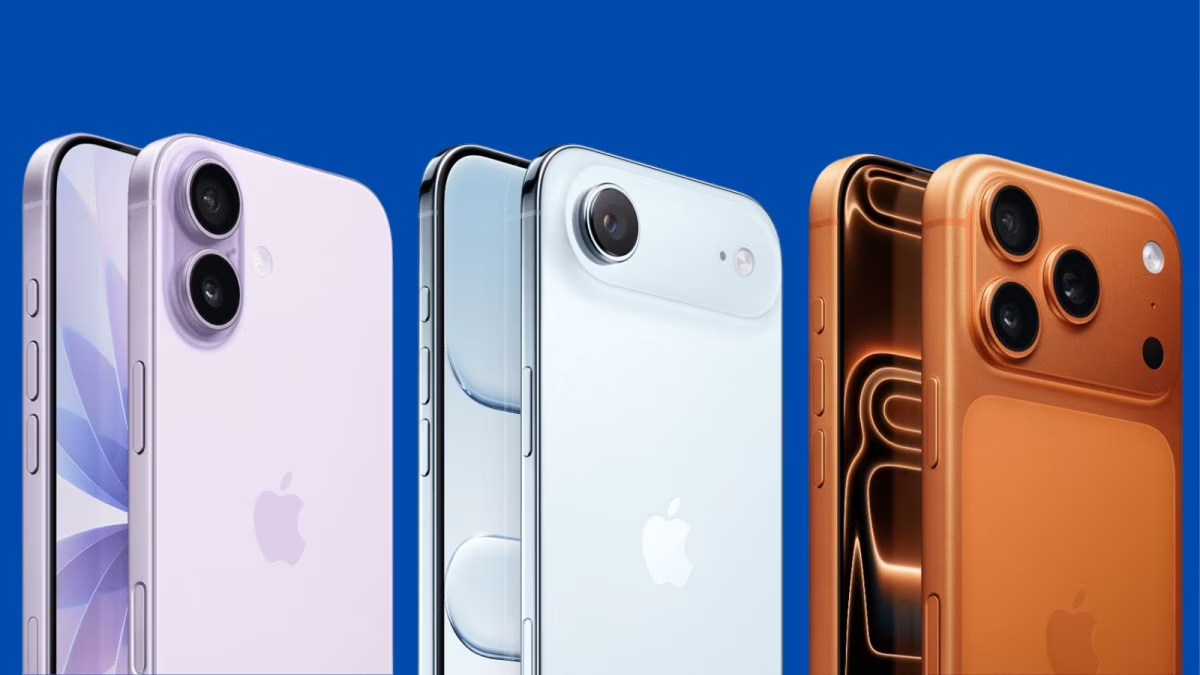
If you are already saving up for the iPhone 18, you might want to start setting aside a little extra cash. New reports indicate that the cost of making Apple’s next-generation processors is rising sharply, which could force the company to raise the price of its flagship phones in 2026.
The $30,000 Wafer Problem
The issue starts at the factory level. Apple’s chipmaker, TSMC, is moving to a new, ultra-advanced “2nm” manufacturing process to build the upcoming A20 and A20 Pro chips. This technology makes phones faster and more efficient, but it is incredibly expensive to produce.
According to recent data, the price for a single 2nm silicon wafer—the large disc used to print hundreds of chips—has jumped to approximately $30,000. For comparison, the wafers used for today’s 3nm chips cost around $20,000. That is a 50% increase in raw material costs before the chips are even finished.
A Massive Jump in Price Per Chip
When you break it down to the individual processor inside the phone, the math gets even uglier. Estimates suggest Apple may have to pay around $280 for every single A20 chip it buys.
To put that in perspective, the current A19 Pro chip reportedly costs Apple about $150. The older A18 Pro was even cheaper, at roughly $50. If these numbers hold true, Apple is looking at an 87% cost increase for the brain of the iPhone 18. This leaves the company with a tough choice: eat the cost and make less profit, or pass the bill to the customer.
Samsung is Cheaper, But There’s a Catch
Apple does have another option, but it comes with risks. Rival manufacturer Samsung is selling its own 2nm wafers for around $20,000—about 33% cheaper than TSMC.
However, price isn’t everything. TSMC is known for having better “yields,” meaning fewer chips are broken or defective during manufacturing. Samsung has historically struggled to match TSMC’s quality and consistency. Because Apple needs millions of perfect chips for the iPhone 18, iPhone Air, and the rumored iPhone Fold 2, they are likely stuck paying TSMC’s premium prices to ensure reliability.
Market Impact & Context
This price hike signals the end of an era. For years, we got faster phones for roughly the same price. Now, as chip technology hits physical limits, making things smaller is getting exponentially more expensive.
If Apple raises prices in 2026, it won’t just affect the Pro models. It sets a new standard for the entire industry, likely giving competitors permission to raise their prices too. We are moving toward a world where the “premium” phone tier gets even more exclusive, separating high-end flagships from standard models more than ever before.
What Comes Next
The iPhone 18 lineup is still over a year away, scheduled for September 2026. Apple has time to negotiate, but consumers should be prepared for sticker shock when the new devices finally arrive.
