


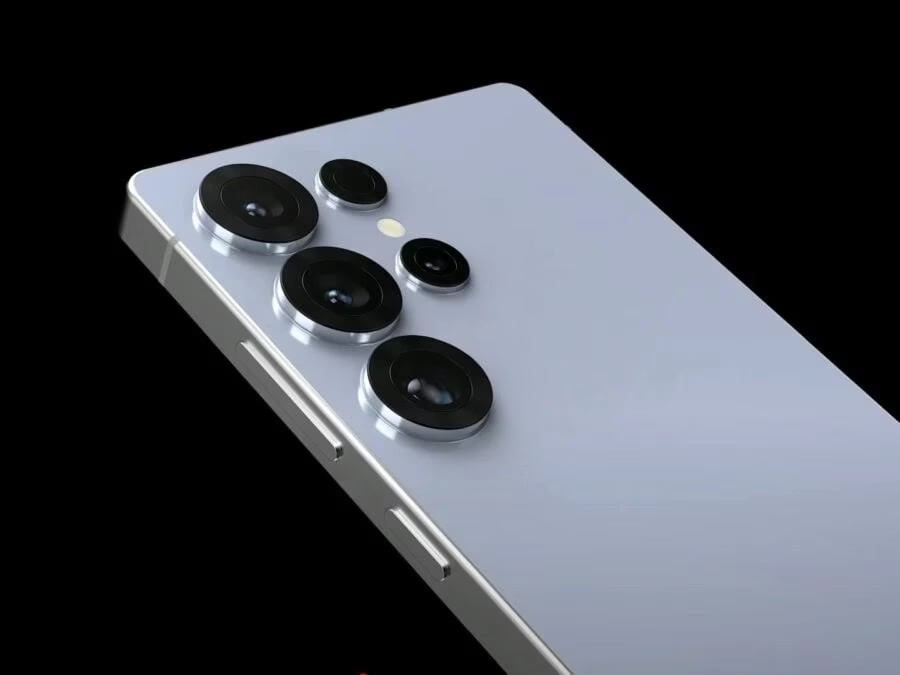
Samsung appears to be prioritizing optical quality over raw numbers for its next major release. According to new reports, the Galaxy S26 Ultra—expected to launch in February 2026—will introduce advanced lens coatings specifically designed to fix the glare and “ghosting” issues that have plagued recent flagship cameras.
Clearing Up the View
The information comes from reliable industry insider Ice Universe, who shared details on Weibo about the upcoming hardware. The primary upgrade involves a new anti-reflective coating applied to the camera lenses.
Anyone who has taken a photo of a streetlamp at night or shot directly into the sun knows the problem: bright lights often scatter, creating floating orbs (ghosting) or washing out the image with haze. By improving the physical glass and its coatings, Samsung aims to stop this light scattering before it hits the sensor, resulting in clearer, punchier photos in difficult lighting.
Better Portraits and Processing
Beyond the glass, Samsung is reportedly tweaking its image processing software. Previous Galaxy phones have faced criticism for occasionally making skin tones look unnatural or over-processed. The S26 Ultra is expected to address this with updated algorithms that prioritize authentic color reproduction.
While the lens tech is new, the sensor setup sounds familiar. Leaks suggest the phone will stick with a quad-camera array: a massive 200-megapixel main sensor, a 50-megapixel ultrawide, and two telephoto lenses (3x and 5x zoom). The strategy seems to be refining the existing hardware rather than swapping it out entirely.
Market Impact & Context
This move signals a shift in the smartphone “camera wars.” For years, brands fought over who had the most megapixels. Now, the battleground is shifting to optics. Competitors like Vivo and Xiaomi have already partnered with traditional camera makers like Zeiss and Leica to use high-end lens coatings.
Samsung is playing catch-up in this specific area. By addressing practical annoyances like lens flare, they are targeting real-world usability. However, this refinement might come at a cost. With the phone expected to run on a cutting-edge 2nm Exynos 2600 chip, manufacturing costs are rising, which could lead to a higher retail price when the series debuts next year.
What to Expect Next
The Galaxy S26 series is still over a year away, so plans could evolve. We expect to see more concrete details about the pricing and global availability closer to the reported February 2026 launch window.
