


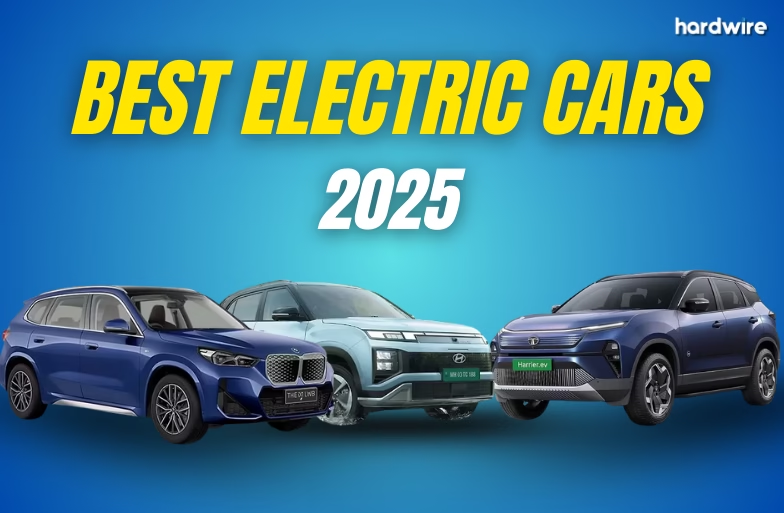
2025 is in its closing chapter, and the year is set to wrap up soon. The mobility sector witnessed a massive transformation this year—especially in the electric vehicle space. From rapid infrastructure development to the launch of new EVs almost every month, manufacturers offered multiple choices to customers across varied price brackets.
Best Electric Cars in 2025
As we prepare to step into the New Year, we’ve curated a list of top electric vehicles that not only grabbed eyeballs but also played a crucial role in shaping India’s EV landscape. More importantly, these launches helped build confidence among buyers, significantly reducing concerns around range anxiety and everyday usability.
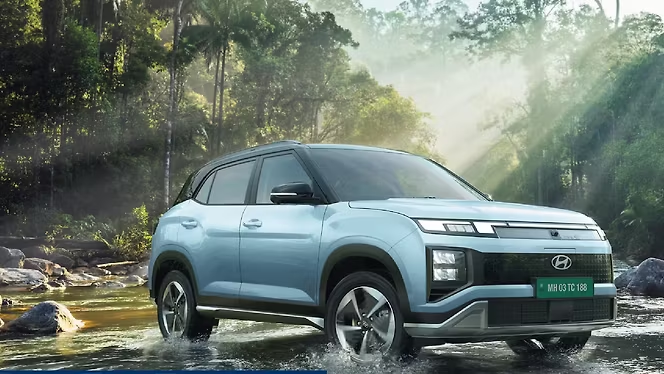
Hyundai Creta Electric
After ruling the ICE market with the Creta for years, Hyundai introduced its electric avatar in 2025. Ever since its launch, the Creta Electric has remained in the spotlight. Credit goes to its futuristic cabin, attractive colour options, and refined, silent driving experience, which made it instantly appealing to Indian buyers.
Top Elements:
- Battery Options: 42 kWh and 51.4 kWh liquid-cooled lithium-ion battery packs
- Driving Range: Up to 390 km (42 kWh) and 473 km (51.4 kWh long-range) as per ARAI
- Power Output: 99 kW (135 PS) with the smaller battery and 126 kW (171 PS) with the larger battery
- AC Charging: 10–100% in approximately 4 to 4.8 hours using an 11 kW charger
- DC Fast Charging: 10–80% in around 58 minutes with a 50 kW DC fast charger
- Performance: Long-range variant accelerates from 0–100 km/h in about 7.9 seconds
- V2L Capability: Vehicle-to-Load function to power external devices
Price Details:
The Hyundai Creta Electric was launched in India with a starting price of **Rs 22 lakh**, while the top variant is priced at Rs 26 lakh (all ex-showroom).
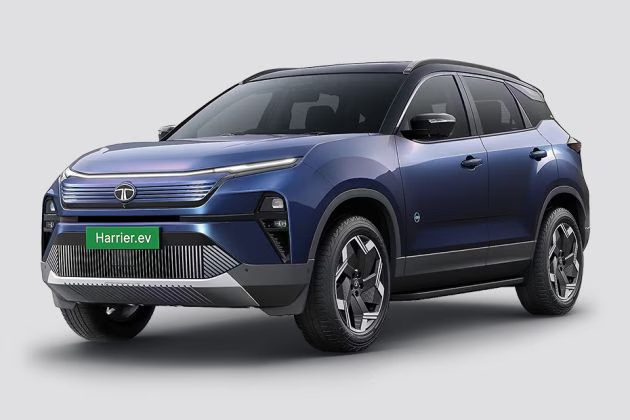
Tata Harrier EV – Tata’s Premium Electric Leap
Tata Motors has enjoyed decades of success in the ICE segment, and with the Harrier EV, the brand made a confident move into the premium electric space. The electric version of the Harrier received a warm response from customers, thanks to its strong performance credentials, impressive range, and the retention of Tata’s rugged DNA beneath the skin.
Top Elements:
- Battery Options: 65 kWh and 75 kWh LFP battery packs
- Claimed Range: Up to 627 km on a full charge (75 kWh RWD variant)
- Real-World Range: Estimated between 480–505 km
- Motor Output: 238 PS for RWD; AWD variant delivers up to 313 PS and 504 Nm
- Acceleration: AWD version clocks 0–100 km/h in approximately 6.3 seconds
- Charging: Supports up to 120 kW DC fast charging (20–80% in ~25 minutes)
- Platform: Built on Tata’s Acti.ev+ electric architecture
Price Details:
The Tata Harrier EV entered the competitive premium segment with prices starting at Rs 30 lakh, while the top variant goes up to Rs 35 lakh (all ex-showroom).
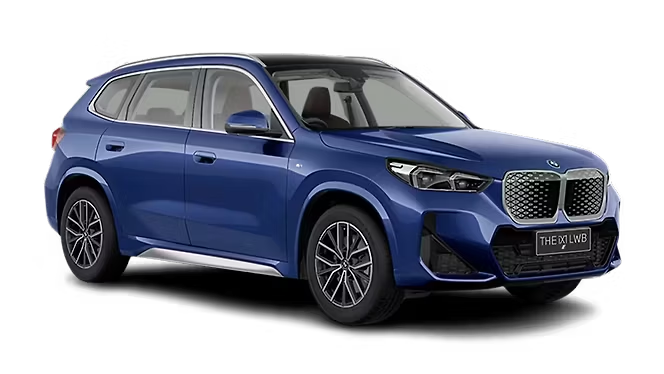
BMW iX1 LWB – Entry-Level Luxury EV
As global manufacturers accelerated their shift towards electric mobility, BMW joined the race with the iX1 Long Wheelbase electric SUV. Designed for buyers seeking luxury, comfort, and practicality in an electric package, the iX1 LWB marked BMW’s strong intent in India’s premium EV space.
Key Elements:
- Battery Capacity: 66.4 kWh battery pack
- Driving Range: Up to 531 km on a full charge
- Power Output: Single motor producing 204 hp and 250 Nm
- Acceleration: 0–100 km/h in approximately 8.6 seconds
- Charging: 130 kW DC fast charging (10–80% in ~29–32 minutes) and 11 kW AC charging (~6.5 hours)
- Drivetrain: Front-wheel drive with permanent magnet synchronous motor
- Dimensions:2,800 mm wheelbase and 4,616 mm length
- Features: Curved widescreen display, panoramic sunroof, Harman Kardon audio, Level 2 ADAS
Price Details:
The BMW iX1 LWB was launched at **Rs 49 lakh (ex-showroom)**, positioning it as one of the most accessible luxury electric SUVs in the Indian market.
Final Verdict
There’s no denying that 2025 has been a defining year for electric vehicles in India. Rather than focusing solely on mass production, manufacturers concentrated on impactful launches that shaped buyer perception.
From Hyundai making EVs mainstream with the Creta Electric, to Tata pushing premium boundaries with the Harrier EV, and BMW strengthening luxury electric mobility, each model played a significant role in expanding India’s EV ecosystem across multiple price segments.
