


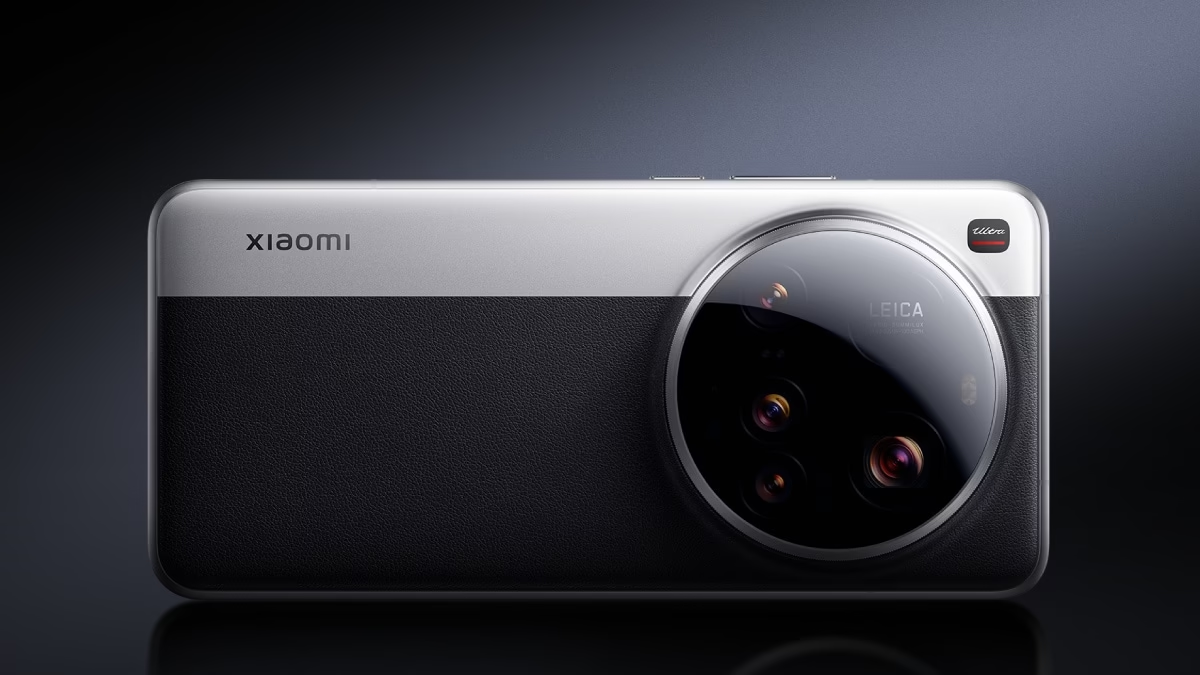
Xiaomi appears poised to restructure its flagship strategy in India, with new regulatory filings confirming the imminent arrival of the standard Xiaomi 17 and the top-tier Xiaomi 17 Ultra. While the certification signals a forthcoming launch, reports indicate the company may skip its intermediate “Pro” variants for the Indian market entirely.
Regulatory filings and launch timeline
The standard Xiaomi 17 and the high-end 17 Ultra have been spotted on the Bureau of Indian Standards (BIS) website, a mandatory clearance step that typically precedes a retail launch by a few weeks. Similar approvals were noted on Thailand’s NBTC platform, corroborating a broader international rollout strategy for early 2026.
This aligns with recent comments from Xiaomi Group executive Xu Fei, who confirmed a 2026 global release window for the Ultra model. However, industry chatter suggests a streamlined portfolio for India. Tipster Abhishek Yadav reports that the Xiaomi 17 Pro and Pro Max—distinctive for their rear secondary displays—are unlikely to launch in the country, leaving a significant gap between the entry-level flagship and the Ultra.
Hardware and performance parity
Both certified models share a common foundation, running on Qualcomm’s 3nm Snapdragon 8 Elite Gen 5 chipset. The differentiation lies primarily in form factor and imaging capabilities.
The standard Xiaomi 17, which debuted in China in September, serves as a compact option with a 6.3-inch OLED panel and high brightness capabilities. In contrast, the Ultra model targets the premium segment with a massive 6.9-inch LTPO canvas and advanced camera hardware, aiming to compete directly with Samsung’s “Ultra” branding.
Market Impact & Context
If Xiaomi proceeds with a “barbell” strategy—launching only the base and Ultra models—it represents a sharp pivot from previous years where Pro models bridged the price gap. This approach simplifies consumer choice but risks alienating buyers who want premium features without the massive footprint or price tag of the Ultra.
The exclusion of the Pro models would also remove the unique secondary rear display feature from the Indian lineup, a differentiator that could have helped Xiaomi stand out in a crowded market. By focusing solely on the compact flagship and the super-premium camera phone, Xiaomi is likely trying to avoid cannibalizing sales within its own portfolio while directly challenging the Samsung Galaxy S25 and S25 Ultra.
With regulatory hurdles cleared, an official launch date is expected soon. The key variable remaining is how Xiaomi will price the Ultra in India to justify the leap from the standard model.
