

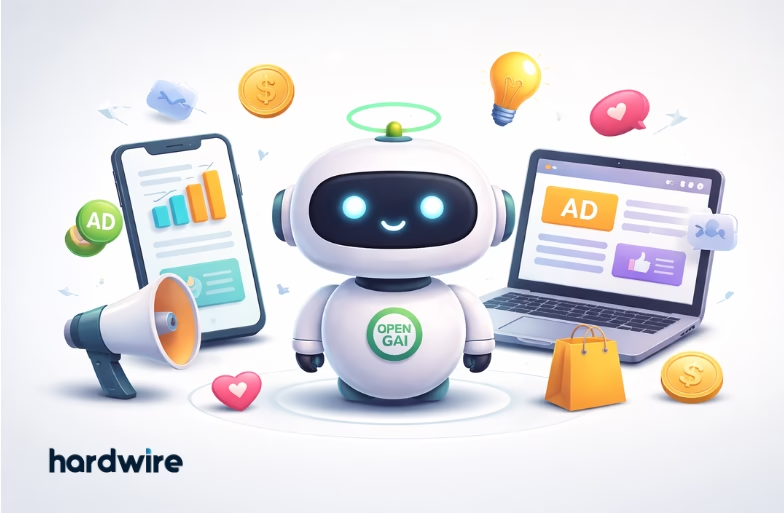
OpenAI has started testing ads in ChatGPT for Free and Go users. The test marks the first time the company has introduced sponsored messages inside its chatbot. OpenAI said the goal was to support free access while keeping user privacy and trust intact.
Why OpenAI Is Introducing Ads
Running ChatGPT for millions of users every day requires huge computing resources. This includes powerful servers, data storage, and continuous maintenance. These operations come with high costs. OpenAI said that introducing ads will help cover these expenses and keep ChatGPT accessible to everyone, especially those using the free version. By earning revenue through ads, the company can continue improving performance, speed, and reliability without depending only on paid subscriptions. In short, ads are meant to make the platform sustainable while ensuring users still get a smooth and consistent experience.
Those who do not want ads can upgrade to paid plans such as Plus, Pro, Business, or Enterprise which remain ad-free. Free users can also opt out of ads, but with fewer daily messages.
How ChatGPT Ads Work
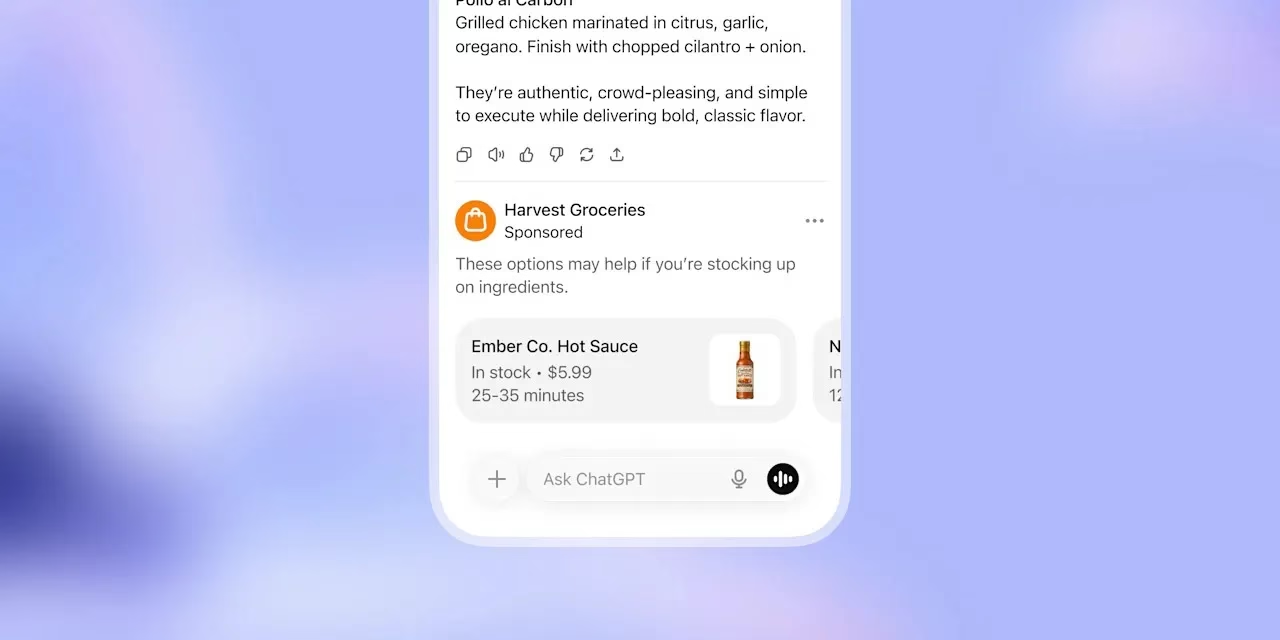
According to OpenAI, ads will appear clearly labelled as “sponsored” and will be visually separate from normal answers. The ads will NOT change or influence ChatGPT’s replies. Instead, they will appear alongside topics users are discussing.
Let’s understand this with an example, suppose someone planning a meal might see an ad for grocery kits or recipe apps. The system chooses ads by matching them to a conversation’s topic and a user’s previous interactions, but not by sharing chat data with advertisers.
OpenAI said ads will only show to logged-in adult users. Those under 18 will not see any ads. The company also said ads will not appear next to sensitive or restricted subjects like health, mental health, or politics.
Privacy and User Control
OpenAI has stressed that conversation privacy remains a priority. Advertisers will not get access to any personal information, chat histories, or memory features. They only receive broad data such as the number of times an ad was shown or clicked.
Users will also have complete control over their ad experience. They can do the following:
- Dismiss ads they find irrelevant.
- See why a particular ad was shown.
- Delete ad-related data with one tap.
- Manage or turn off personalised ads anytime.
Learning Phase and Future Plans
For now, this is just a testing phase. OpenAI said it is focusing on feedback from users and advertisers before expanding the programme. The team will monitor how users react, how often they engage with ads, and whether the system maintains trust and relevance.
The company would also continue to refine safeguards and keep conversations safe and private as the programme grows.
Availability of ChatGPT Ads
At present, ChatGPT ads are available only in the United States. OpenAI started testing sponsored messages for Free and Go users in the U.S. on February 9, 2026. The company said this is an early testing phase to understand how users respond to ads and how they can be made more useful without affecting the chat experience.
In India, the ads feature has NOT been rolled out yet. Indian users on Free or Go plans will continue to see the same ad-free interface as before. However, OpenAI is expected to expand the feature to more countries once the testing phase shows positive results.
Reactions from Users and Industry
The introduction of ads in ChatGPT has received mixed reactions. Some users welcomed it, saying it keeps the tool free for more people. Others worry that advertising could make the chatbot feel commercial.
Meanwhile, OpenAI’s rival Anthropic, which makes Claude, stated that its chatbot will remain ad-free. This difference has sparked debate over how AI tools should be funded. It could be either through paid plans, ads, or both.
Conclusion
The testing of ads in ChatGPT marks an important step for OpenAI and the AI industry. It shows how companies are looking for ways to balance accessibility and sustainability while keeping user trust. If done in a right way, ads could help fund free access to powerful AI tools without compromising quality. But OpenAI will need to listen carefully to user feedback to ensure ads feel helpful, not intrusive.
As the company continues this experiment, one thing remains clear that ChatGPT’s answers will stay independent, and users will remain in control of their experience.
