


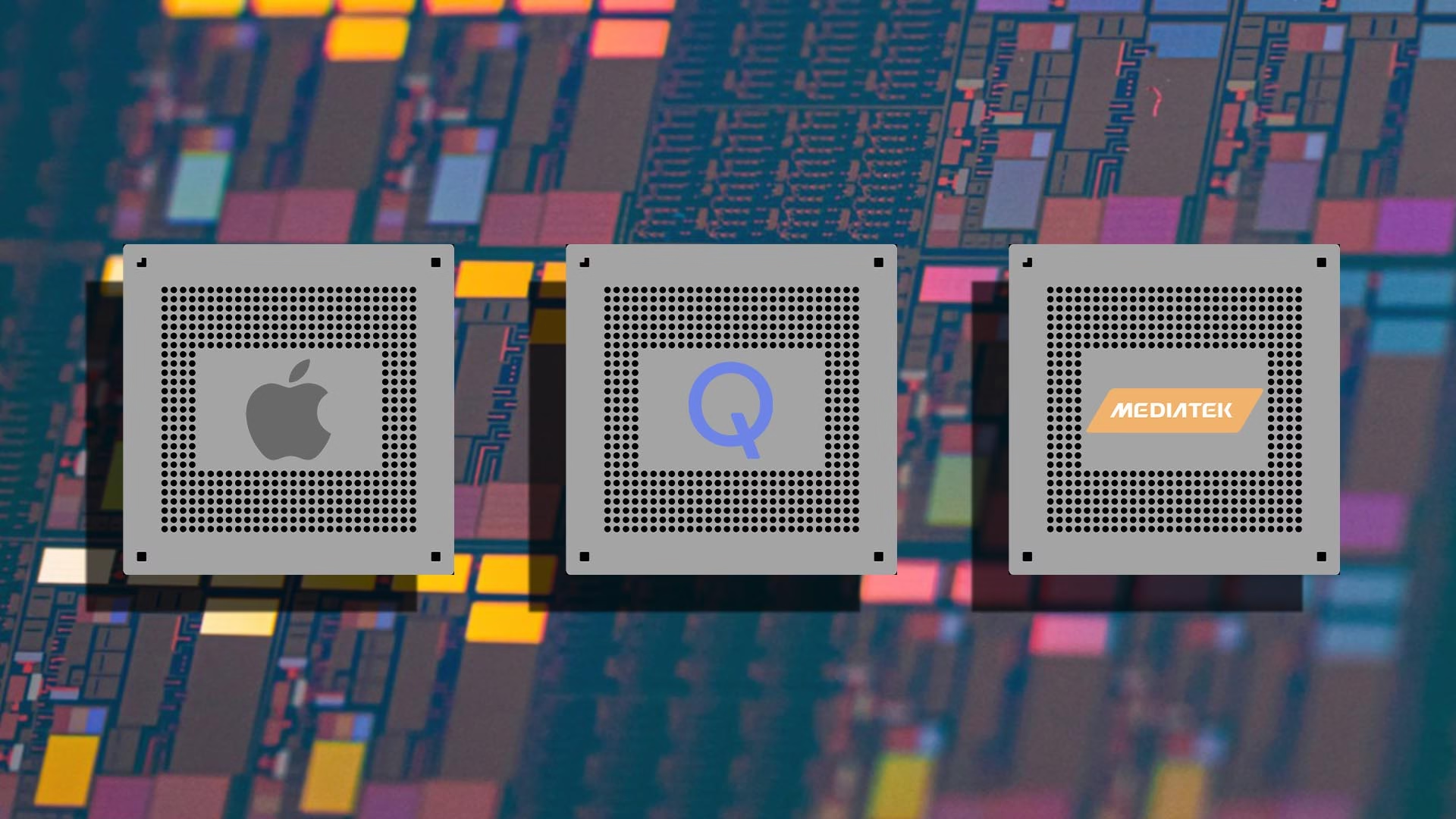
Major silicon designers are reportedly adjusting their roadmaps to prioritize architectural improvements over manufacturing process reductions. A new report indicates that while 2nm technology remains important, it is no longer the primary driver for consumer upgrades or competitive advantage.
Architecture takes precedence over lithography
The industry’s reliance on smaller nanometer figures as a core marketing tool appears to be fading. According to Digitimes, fabless chipmakers are responding to diminishing consumer interest in node numbers by focusing on system integration and customized core designs.
While TSMC’s 2nm process continues to see high demand—with tape-out volumes projected to exceed the 3nm node by 50%—the competitive edge is shifting. Manufacturers are finding that physical node shrinks alone are yielding smaller perceptible gains in user experience compared to the rising costs of production.
Cache expansion and efficiency gains
Recent silicon strategies illustrate this shift toward “internal strength.” Reports highlight Apple’s A19 Pro, which delivered a 29% performance boost in its efficiency cores through architectural changes last year, achieving these gains with negligible power consumption increases.
Similarly, MediaTek is reportedly equipping its Dimensity 9500s with a substantial 19MB CPU cache to rival Qualcomm’s Snapdragon 8 Gen 5. This approach trades pure transistor density for smarter data handling, allowing for faster data retrieval and smoother operation during complex tasks.
Market Impact & Context
This strategic realignment acknowledges a saturation point in the “spec sheet wars.” For years, a 20-30% annual jump in theoretical performance figures was enough to sell flagship devices, but modern users are increasingly prioritizing sustained smoothness over peak benchmarks. By focusing on larger caches and smarter logic blocks, companies can deliver tangible speed improvements without solely relying on the increasingly expensive and difficult physics of lithography shrinking.
Conclusion
While 2nm chips remain a technological inevitability for future flagships, they may no longer define the premium experience on their own. The next generation of mobile performance will likely be determined by chip architecture and memory allocation rather than transistor size alone.
