


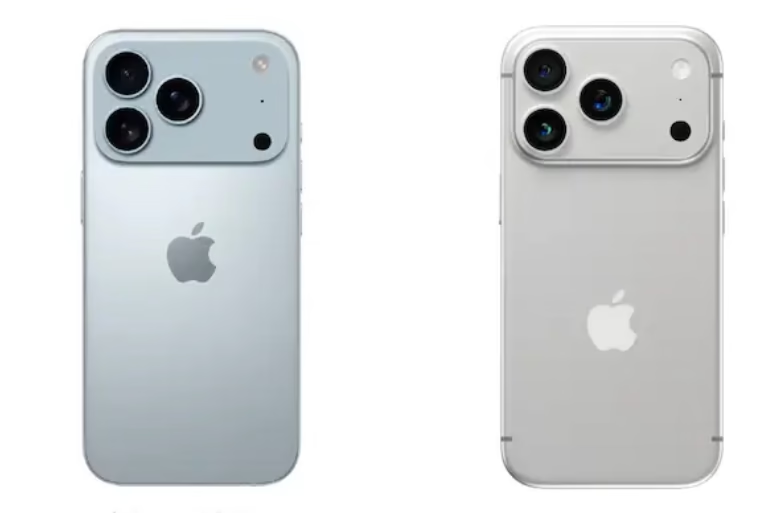
Apple seems ready to fix one of the most annoying differences between its regular and “Pro” phones. According to new reports from top supply chain analysts, the entire iPhone 18 lineup is expected to ship with 12GB of RAM, finally putting the base model on equal footing with the flagship versions.
No more memory gap
For years, buying a standard iPhone meant settling for less memory than the Pro models. That appears to be ending. Analysts Ming-Chi Kuo and Jeff Pu both agree that the iPhone 18, iPhone 18 Pro, Pro Max, and even the rumored iPhone Fold will all carry 12GB of memory.
Currently, the base iPhone 17 is stuck with 8GB, while the Pro versions get 12GB. By standardizing this, Apple ensures that even the cheapest new iPhone can handle demanding tasks—specifically the heavy lifting required by future Apple Intelligence features.
A radical chip change
It isn’t just about adding more gigabytes. There is a rumor that the high-end iPhone 18 Pro will feature a new chip design. The A20 Pro processor might have the memory built directly onto the chip itself, rather than sitting next to it.
In simple terms, this cuts down the distance data has to travel. For the user, that means faster performance and better battery life, especially when the phone is running complex AI tools right on the device.
A confusing release schedule
While the specs are syncing up, the launch dates might be drifting apart. Reports suggest Apple is planning a “two-phase” release for this generation.
We expect the iPhone 18 Pro and Pro Max to launch in their usual September slot. However, the standard iPhone 18 might not show up until March 2027. This would be a major break from tradition, leaving the Pro models as the only new option for the holiday shopping season.
Market Impact & Context
This move is almost certainly driven by AI. Generative AI needs a lot of fast, accessible memory to run smoothly on a phone without connecting to the internet. Apple has historically used less RAM than Android rivals because iOS is efficient, but AI doesn’t care about efficiency—it needs raw capacity. Raising the floor to 12GB guarantees that developers can build powerful apps that work on every new iPhone, not just the expensive ones.
Conclusion
If these reports hold true, 2026 (and early 2027) will be the moment Apple unifies its hardware capability. The main choice for buyers will no longer be about performance, but about how long they are willing to wait for the standard model to arrive.
